
Product bundling is a pricing and merchandising strategy that sells two or more products or services together as a single offer. It helps brands increase average order value, move selected stock, improve perceived value, and create promotions that feel more relevant than a flat discount. For enterprise marketing and commercial teams, bundling is also a way to shape demand, protect margin, and test which combinations drive incremental revenue.
Product bundling turns separate items into a single offer with a clear value exchange. The customer sees one proposition, such as "buy the camera, memory card, and case together for £499," rather than three unrelated products.
A product bundle can be priced in several ways:
The right bundle depends on the brand's commercial goal. A retailer might pair high-demand products with slower-moving accessories to clear stock. A telecoms brand might combine a handset, airtime plan, and entertainment add-on to increase contract value. A travel brand might package a booking with insurance, parking, breakfast, or a room upgrade.
Product bundling works best when the combined offer feels useful, not forced. Customers respond to bundles that reduce effort, solve a related need, or create a better deal than buying items one by one.
Different bundle structures serve different goals. The most common types include pure bundling, mixed bundling, cross-sell bundling, and promotional bundling.
Pure bundling means customers can only buy the products together. This model suits offers where the individual components make less sense alone, such as a software package with required modules or a telecoms contract combining handset, airtime, and data.
Pure bundles can simplify choice, but they also reduce flexibility. Brands use them carefully because some customers prefer to buy only one part of the offer.
Mixed bundling lets customers buy products individually or as part of a bundle. This is common in e-commerce because it gives shoppers choice while still creating an incentive to buy more.
For example, a customer can buy a laptop sleeve on its own, but the brand offers a better price if they buy the laptop, sleeve, and mouse together. Mixed bundling works well for increasing average order value without blocking customers who only need one item.
Cross-sell bundling combines related products from different categories. The aim is to introduce customers to add-ons they are likely to need, such as running shoes with socks, skincare products with a travel bag, or a holiday booking with airport parking.
This type of bundle helps customers discover products they may have missed. It also gives brands a more controlled way to promote attachments than relying only on generic "you may also like" recommendations.
Promotional bundling uses a time-limited offer, discount code, loyalty reward, or partner benefit to make the bundle more compelling. Examples include "buy two, get one free," "bundle and save 20%," or "members get a free accessory when buying this product."
Product bundling matters because it changes both customer behaviour and commercial outcomes. A well-built bundle can increase order value while giving customers a reason to buy now.
The main benefits include:
Bundling also supports incrementality. Instead of giving every shopper the same discount, a brand can design offers that encourage extra spend, category discovery, or attachment of higher-margin products. For example, "save £30 when you add a case and charger" protects more value than a blanket £30 discount on the main product.
The risk is poor execution. Bundles that confuse shoppers, hide the value exchange, or discount too heavily can reduce profit. Brands also need accurate validation rules, especially for coupon-led bundles, so customers cannot apply offers to the wrong products or combine them with other promotions in ways that damage margin.
Uniqodo helps brands manage this complexity by giving commercial and marketing teams a promotion layer above their existing ecommerce stack. Teams can define which products qualify for a bundle, set the reward type, control stacking and usage limits, and restrict offers to specific audiences or partner channels without requiring engineering involvement for each new campaign.
An effective product bundling strategy starts with a clear commercial objective. The bundle should exist for a reason, such as increasing attachment rate, growing basket size, clearing inventory, rewarding loyalty members, or improving partner performance.
A practical approach includes:
Uniqodo's Promotion Engine includes a dedicated bundle builder that lets marketing and commercial teams define which products must be purchased together, using any attribute from the product catalogue. Teams can build bundles based on product category, brand, specific product ID, or a combination of attributes, and add as many products to the bundle as the offer requires.
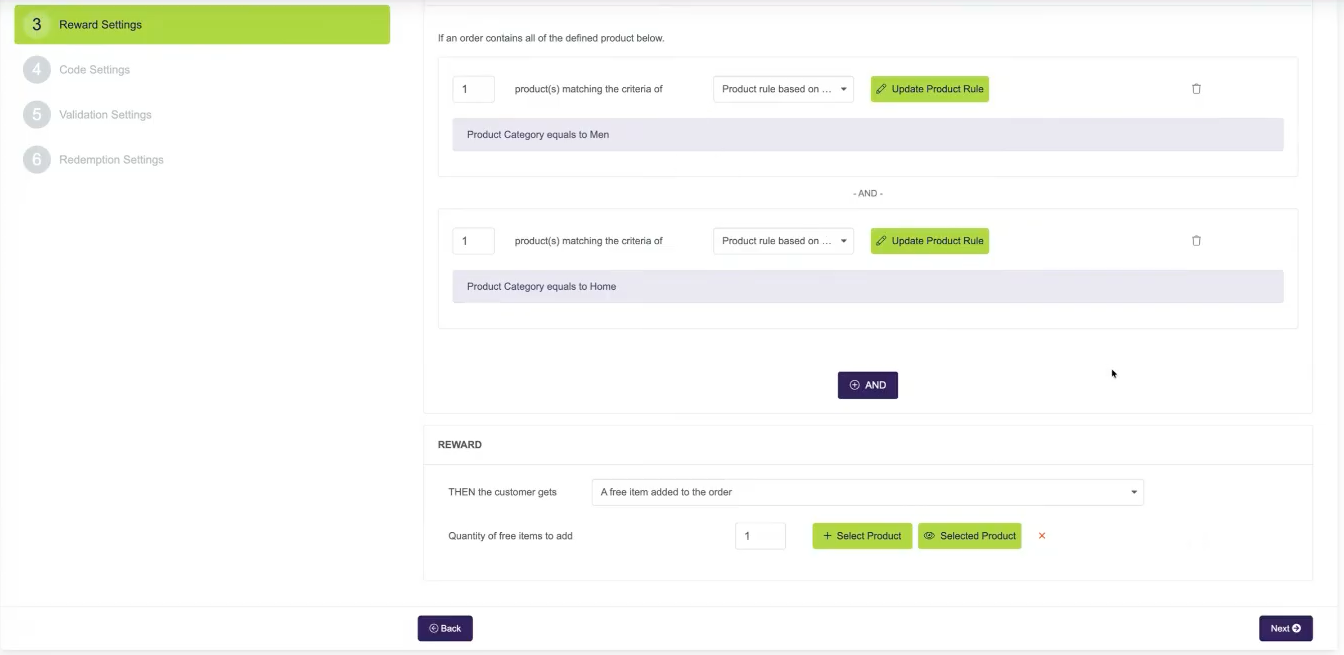
Reward options on bundles include a set price for the combined purchase, a free item, a discount on a specific product within the bundle, a discount on the cheapest item, or a discount on the entire order. Each can be set as a percentage or fixed amount. Stacking rules, usage limits, expiry dates, and customer segment restrictions layer on top without requiring engineering involvement after the initial integration.
For brands distributing bundle promotions through affiliate and publisher networks, Code Distribution connects directly to 24 publisher partners and 7 affiliate networks, giving commercial teams per-partner attribution on every redemption. Onsite Experiences can surface the bundle offer at the right point in the browsing journey, helping convert shoppers who are close to qualifying.
Product bundling combines multiple items into a single offer with a defined price or reward. Cross-selling recommends related products alongside a purchase but lets the customer decide whether to add them individually. A bundle presents one proposition. A cross-sell presents separate suggestions. Brands often use both together, with bundles as the structured offer and cross-sell recommendations as the supporting discovery layer.
Pure bundling means the products are only available as a package. Mixed bundling means customers can buy items individually or together as a bundle, usually with a price incentive for choosing the bundle. Mixed bundling is more common in ecommerce because it gives shoppers flexibility while still encouraging higher basket value.
The core metrics are bundle conversion rate, average order value, attachment rate, margin impact, and redemption rate. The most important check is incrementality: whether the bundle is driving new spend or simply discounting purchases customers would have made anyway. If a bundle sells well but cannibalises higher-margin standalone purchases, the rules need adjusting.
Yes. Brands can limit bundle promotions to defined customer segments such as loyalty members, students, employees, or partner audiences. Unique codes or gated journeys prevent the offer from reaching unintended recipients. Per-partner attribution lets commercial teams track which channel drove each bundle redemption and adjust distribution accordingly.

Stop code leakage. Replace shareable generic codes with high-entropy unique strings. Protect your margins by ensuring discounts only apply to the intended audience under specific, validated conditions.

Execute complex campaigns. Move beyond basic discounts with multi-tiered rewards, product bundles, and discounts, all managed without waiting for a developer to clear your roadmap.

Convert with intent. Use real-time data to trigger onsite nudges or referral loops exactly when they matter. Create a unified journey that turns browsing interest into confirmed sales.

Scale partner sales. Automate the delivery of unique codes to thousands of partners instantly. Replace manual spreadsheets and CSV exports with secure, trackable API distribution.




We'll show you exactly how Uniqodo handles your use case - fraud controls, mechanic complexity, and ROI attribution included.