
Travel booking abandonment hits 80%, while promo code leakage is rising. Uniqodo gives travel brands the precision to control discounts across every date, rate and customer segment.
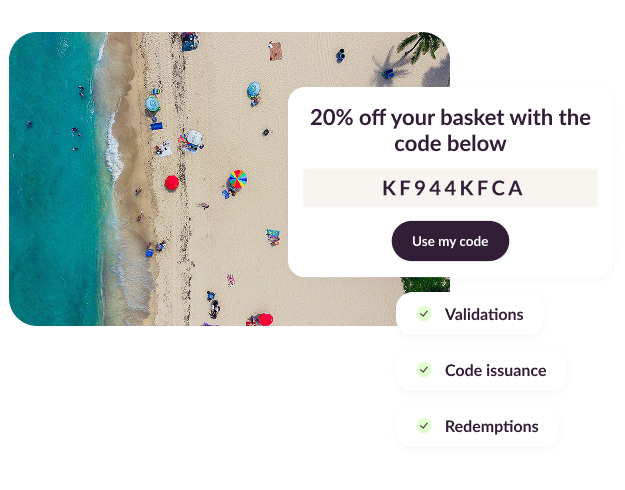






High-intent travellers search and leave without booking. Generic discounts fail to convert them, while static "site-wide" codes are too blunt an instrument to recover these lost high-value sales during the consideration phase.

With a 38% YoY increase in promo code abuse, travel margins are under threat. Codes intended for specific partners or closed groups end up on voucher sites, leading to accidental discounting of high-demand bookings.
Most booking engines struggle with granular timing. Travel brands often find themselves discounting peak-season dates where they already have organic demand, or failing to trigger incentives when inventory is actually at risk of staying empty.
Define incentives based on seasonality and local events. Set rules so promotions only apply to the specific dates and rates that need a volume boost, protecting your high-margin peak periods.
Stop code harvesting at the source. Whether distributing through affiliates, CRM or partners, every code is unique and validated against your specific travel criteria at the point of booking.
Identify high-intent search behaviour and intervene instantly. Present unique, time-sensitive codes via inline banners or overlays to incentivise completion before the user leaves the site to check a competitor.

"Uniqodo is a tight team, yet are always available for you. It’s an issue for lots of businesses, to protect revenue from discounting. This is a great way to achieve this and they do all the work for you – setting up the codes and the content on your website. Then they are happy to get involved in understanding your objectives and help with wider conversations in the business.
Sabrina Head
Avis Budget Group - CRM and Loyalty Manager for EMEA
"When we originally met with Uniqodo, we really needed them to only do one thing: to allow us to prevent the misuse of codes, but they have given us the ability to go above and beyond, offering our customers and our partners so much more. From evergreen, always-on discount codes, and offers for free breakfast or Wi-Fi, to custom error messages and in-depth reporting. We now see more users signing up for emails to get discount codes now versus before just using the discount and not growing our email database.”

Maryke Lotz
Travelodge - Manager for Partnerships and Affiliates
Move away from generic "SUMMER20" codes to single-use identifiers that connect your booking engine to marketing channels without the risk of viral leakage.
Enforce validation rules across external partner sites, so third-party distribution doesn't mean a loss of control over your inventory or brand.
Set specific dates where promotions never apply, ensuring 100% margin protection during major events or peak holiday seasons.
Trigger personalised offers based on real-time search data,such as specific destinations, stay durations or guest counts, to reduce the industry's high abandonment rate.




If legacy systems are limiting your travel promotion strategy, it’s time for technology built for the complexity of dates, rates and margins.



Yes. Unlike generic engines, Uniqodo allows you to set "Travel Date" criteria, ensuring discounts only trigger for the specific inventory you want to move.
Uniqodo sits between your booking engine and marketing channels, allowing you to run complex promotional logic without needing heavy IT or developer support.
By using unique, single-use codes instead of generic words. Once a code is used or its specific criteria aren't met, it expires, making it useless for voucher site scrapers.
Yes. Promotions can be configured at a granular level, including destination, property, route or region, allowing you to target underperforming inventory without impacting high-demand locations.
Yes. Offers can be triggered based on real-time user behaviour, such as destination searches, dates or booking intent, helping convert high-value traffic before they leave.
Yes. You can define rules based on demand signals, ensuring promotions are only applied when inventory needs support, not when demand is already strong.