

Coupon marketing campaigns are quickly becoming a staple of ecommerce and high street shopping. But bog-standard vouchers won’t cut it anymore. 79% of customers expect personalisation from promotions. You need to consider your messaging to get the kind of ROI you need.
Generic codes also leave you exposed to the risk of promo code misuse. If you want to make sure that your codes are used by the right people for the right reasons, you need single-use codes. These same codes provide analytic insights that will help you iterate and improve your campaign, and let you take personalisation to the next level.
Creating unique, personalised codes, however, can create significant administrative costs. You need software tools that integrate with your CRM to pull personalised information and automate the creation of vouchers. But which software tools are the best?
We've compared the leading platforms for creating and managing unique vouchers. Some are full promotion engines with advanced rules and personalisation. Others focus on voucher distribution or work as part of a broader e-commerce platform. The right choice depends on how complex your promotions are, how much control your marketing team needs, and where your vouchers need to reach customers. The comparison table below gives you a quick overview. The detailed breakdowns follow.
1. Uniqodo
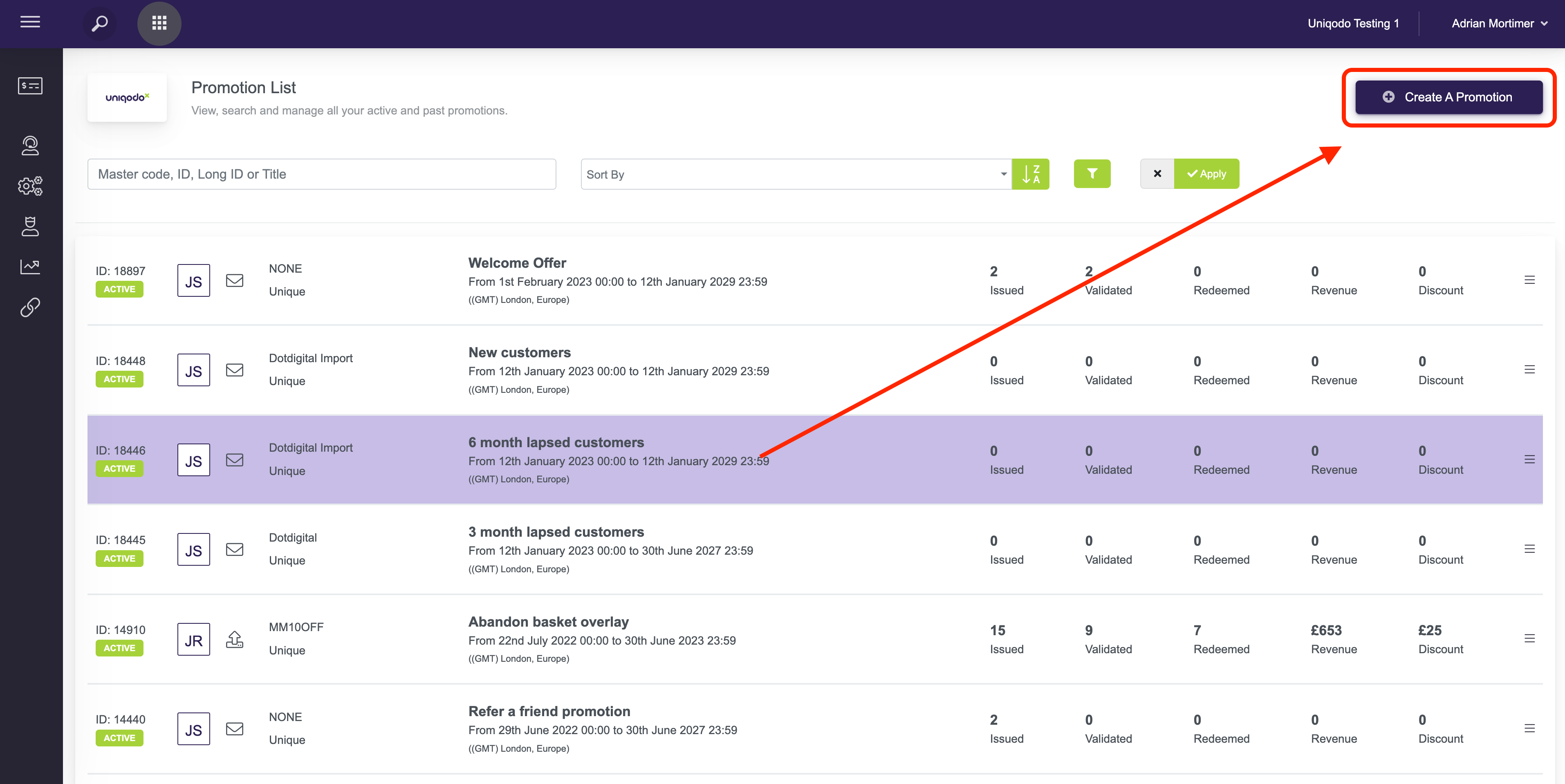
As the name suggests, Uniqodo has the specific aim of helping businesses leverage unique single-use voucher codes. This API-first tool enables users to create, manage, distribute and track promotional codes across every channel.
Our business model is built to address the traditional pain points associated with the use of promo codes such as misuse and lack of uptake due to poor (or no) personalisation. Although Uniqodo has only been around since 2015, the platform has already amassed a range of high-profile advocates including Avis, TUI, SimplyBe and Boots.
What it does well:
Advanced promotion rules. With a focus on easy operation and integration, Uniqodo also offers an advanced discounting functionality which can be added to any eCommerce site. Validation rules and data-driven discounts can be easily integrated into your voucher campaign for a range of criteria-based promotions which offer virtually unlimited scope for the kind of personalisation customers crave. The tool also has a comprehensive and easy-to-use suite of analytics and allows for A/B testing to target specific groups and facilitate Conversion Rate Optimisation.
Built-in code distribution. What sets Uniqodo apart from the other tools in this guide is code distribution. The platform integrates directly with 7 affiliate networks (including AWIN, CJ Affiliate, and Impact) and 24+ publisher partners (including Blue Light Card, Unidays, and Student Beans), with per-partner attribution on every redemption. For brands distributing vouchers through email, an embeddable HTML widget delivers unique codes into any CRM or email platform without requiring a direct integration.
Full promotion experience. Beyond code generation, the platform includes onsite experiences, loyalty, and referral, all connected to the same promotion rules and reporting. Once the API integration is in place, marketing teams build, launch, and modify promotions independently.
The Uniqodo team pride themselves on an agile and proactive approach as well as individualised support based on the unique needs of users. There is a range of price points with varying redemption allowances and functionalities. However, all levels have access to a dedicated Client Success Team. These features combine for a highly comprehensive package, which could suit your business' needs well.
2. Voucherify
Voucherify is an API-first, cloud-based promotion management platform. Established in 2015, Voucherify is built around a developer-friendly architecture that lets teams generate and manage voucher campaigns programmatically at scale.
What it does well:
Bulk code generation. Voucherify makes creating unique voucher codes easy. The platform supports bulk generation of millions of unique codes in a single operation, with configurable prefixes, character sets, and code patterns. With a commendable 99.9% uptime, it's among the most reliable and user friendly solutions out there.
Loyalty and referral. Promotional codes are just the tip of the iceberg, too. They can be used as part of a fully customisable loyalty program which encompasses cart level promotions and digital gift certificates as well as multi-level referral promos. There are also pre-built widgets for distribution and redemption of codes, while tech-savvy users can create their own through the API.
Ready-made integrations. Voucherify have built their brand around simplicity. As such the platform is ready to use "out of the box" with a host of integrations for email, SMS and platforms like Braze, Bloomreach, and Iterable. Codes can be generated in text, QR, and barcode formats, which is useful for brands running both online and in-store voucher campaigns.
Limitations:
No native partner distribution. Voucherify's code distribution relies on connected marketing tools and API calls rather than built-in partner or affiliate channel integrations. Brands that need to distribute unique vouchers through publisher networks or attribute redemptions to specific partners will need to build those workflows separately or pair Voucherify with additional tools.
API-volume pricing. The enterprise pricing model scales on API call volume. For high-traffic retail or travel brands, seasonal voucher campaigns can drive significant cost increases regardless of whether that traffic converts. A pricing model tied to conversions rather than API activity gives commercial teams more predictable costs and a clearer link to ROI.
3. Talon.One
Talon.One markets itself as "The world's most flexible Promotion Engine". Another API-based platform, Talon.One purports to be able to help brands build targeted promotional campaigns in mere minutes.
With an impressive array of users around the world including National Express, Delivery Hero, Airfox and Getsafe, Talon.One is already trusted by an array of established brands of all shapes and sizes.
What it does well:
Rules-driven voucher logic. The way Talon.One works is simple enough. Data like customer profiles, activity and third-party data is fed into the engine via the API while custom attributes can be used to create unique and highly targeted promotions. These can then be used to prompt outgoing emails or CRM updates with randomly generated unique single-use voucher codes. With full coupon, discount and referral functionality, users can create a suite of personalised promotions, and rule validation capabilities insulate users from risks often associated with voucher campaigns.
API tooling. There's also a suite of API features including API analytics and webhook logs. Pricing is custom based on data volume, with no published tiers.
Limitations:
No onsite delivery layer. Talon.One's rule builder handles promotion logic on the backend, but the platform doesn't include its own onsite delivery layer. Getting unique vouchers in front of customers through overlays, banners, or partner channels requires connecting Talon.One to separate frontend and distribution tools. For brands that need the voucher generation and the customer-facing delivery in one system, that's an additional integration step.
4. Coupon Carrier
Coupon Carrier is a code distribution platform built around single-use vouchers. Founded in Sweden, it focuses on a problem that most enterprise promotion engines don't prioritise: getting a unique code to one person and verifying that it's only used once, whether that's online, in-store, at an event, or through a printed flyer.
What it does well:
One code, one recipient. The platform assigns one unique voucher per recipient and locks it after the first redemption. Staff validate codes either by tapping a "Mark as Used" button on the customer's voucher page or by scanning a QR code from their own phone. No POS integration, app download, or specialist hardware is required.
Multi-channel delivery. Vouchers can be delivered through email (via integrations with Mailchimp, ActiveCampaign, HubSpot, Brevo, and Klaviyo), generated automatically through connected Shopify or WooCommerce stores, triggered through Zapier workflows, or exported as print-ready batches with unique QR codes. Each voucher carries its own redemption record, so campaign reporting shows exactly which codes were issued, redeemed, expired, or unused.
Time-sensitive codes. For e-commerce teams, Coupon Carrier can auto-generate time-sensitive Shopify or WooCommerce discount codes that expire within 24 to 72 hours, are restricted to one use per customer, and can be limited to specific products or collections. This helps prevent static codes from leaking to coupon sites.
Limitations:
No promotion logic. Coupon Carrier doesn't include promotion logic like qualification rules, tiered discounts, or basket-based conditions. It generates and distributes unique codes, but the discount rules themselves are managed in your e-commerce platform or applied manually by staff. There's no affiliate or publisher network distribution, no onsite engagement layer, and no campaign-level analytics beyond redemption tracking. For brands that need complex promotion mechanics alongside unique voucher generation, a dedicated promotion engine will be a better fit.
5. Adobe Commerce (Magento)
Adobe Commerce (formerly Magento) is one of the most widely used and trusted comprehensive ecommerce platforms on the market. With a range of solutions to suit businesses of all kinds, it should come as no surprise that the platform has the capacity to generate and distribute unique randomly generated voucher codes. Magento Open Source offers the same core coupon functionality for free, though some advanced features are exclusive to the paid Adobe Commerce licence.
What it does well:
Configurable code generation. Coupon codes can be used whenever a set of conditions, defined by the user, are met. For example, codes can be validated for limited periods of time. Batches of coupon codes can be generated and formatted automatically, with configurable code length, prefixes, suffixes, and character sets. Pre-generated code lists can also be imported via CSV, and from version 2.4.7, customers can apply multiple coupon codes to a single cart.
Community and support. Because it's such a huge and ubiquitous brand, there's a great deal of support both from the platform's dedicated support service and the huge community of expert Adobe Commerce users. If you're already using the platform, it makes sense to use what's already built in before evaluating a separate tool.
Limitations:
Limited to standard discount mechanics. Adobe Commerce's coupon functionality is tied to cart price rules, which handle standard discount mechanics well but don't extend to more complex promotion types like product-specific bundles, tiered rewards, or attribute-based qualification logic. There's no built-in affiliate or publisher voucher distribution, no per-partner attribution, and no onsite engagement layer. For brands that have outgrown basic percentage-off and fixed-amount discounts, the platform's native tools will likely need supplementing with a dedicated promotion engine.
How We Evaluated These Unique Voucher Software Tools
To make this comparison as useful as possible, we looked at each tool through the same lens. Here's what we focused on.
Code generation and security. Can the platform generate unique, single-use codes at scale? Does it support validation rules that prevent misuse, including per-customer limits, expiry windows, and real-time redemption checks?
Promotion flexibility. Does the tool go beyond basic percentage-off discounts? Can it handle tiered rewards, product bundles, brand-specific offers, shipping promotions, or qualification rules based on basket contents and customer attributes?
Distribution and attribution. How do codes reach customers? Through email, affiliate networks, publisher integrations, onsite overlays, or API-driven delivery? Can you attribute each redemption back to the channel or partner that drove it?
Marketing team autonomy. Once the initial integration is in place, can non-technical users build, launch, and modify campaigns without engineering involvement?
Analytics and optimisation. Does the platform provide reporting on redemption rates, revenue impact, and campaign performance? Can you A/B test different offers and code strategies?
Do You Need a Unique Voucher Software or a Free Code Generator?
If you only need a batch of random codes for a one-off campaign, a free code generator will do the job. Tools like Plutio, Sellfy, and Triggerbee let you generate codes in bulk, customise the format, and export them as a CSV. For simple use cases, that's enough.
The limitations show up when you need more than code creation. Free generators don't validate codes at the point of redemption, don't enforce per-customer usage limits, and don't track which channel or partner drove each redemption. There's no fraud prevention, no qualification rules, and no way to connect code behaviour to your broader promotion logic. If a voucher leaks to a deal site, there's nothing stopping it from being reused.
The platforms in this guide handle what happens after the code is generated: validation, distribution, attribution, and reporting. If your voucher campaigns are growing in complexity or you're distributing codes through multiple channels, that's where a dedicated platform earns its value.
Find the Right Unique Voucher Software for Your Business
No matter what solution you choose, as with any technology, it's important to thoroughly research a service or product you're thinking of investing in. Ensure you're outlining the outcomes you want to achieve with the new technology so you can align your research to those goals.
Aligning these goals will be entirely dependent on your business' needs. For example, an online fashion retailer looking to increase customer loyalty will have to use a different voucher strategy to an online travel retailer looking to target shopping cart abandonment. Make sure that the tool you use provides you with the most effective way to achieve your business goals, both in the short-term and long-term.
If code security and partner distribution are your priority, Uniqodo is a good place to start. But whichever tool you choose, the guides and comparisons above should give you a solid foundation for making that decision.
Frequently Asked Questions About Unique Voucher Software
What is a unique voucher code?
A unique voucher code is a single-use alphanumeric string generated for an individual customer, campaign, or partner. Unlike generic codes that can be shared and reused, each unique code can only be redeemed once, which prevents coupon code leakage to deal sites and gives brands full visibility into who redeemed what, when, and through which channel.
How do unique voucher tools prevent code misuse?
Most platforms use a combination of real-time validation, per-customer usage limits, expiry windows, and qualification rules that check eligibility at the point of redemption. If a code has already been used, has expired, or the customer doesn't meet the criteria, the redemption is blocked before the discount is applied.
Can I create unique vouchers with my existing ecommerce platform?
Platforms like Adobe Commerce (Magento) and Shopify include basic coupon code generation features. These handle simple use cases well, but they typically lack advanced qualification rules, affiliate distribution, per-partner attribution, and onsite delivery. If your campaigns are growing in complexity, a dedicated tool will likely fill gaps your platform's native features can't.

Chris Goud