
A member-get-member (MGM) program is a referral scheme in which an existing customer, or member, recommends a brand to someone they know, and the brand rewards one or both of them once the new person joins or buys. UK ecommerce brands usually call the same mechanic refer a friend.
A member-get-member scheme gives each existing customer something personal to share, usually a link or a code, and rewards them when a friend who uses it completes an action the brand can verify. The mechanics match any other referral programme, under a different name.
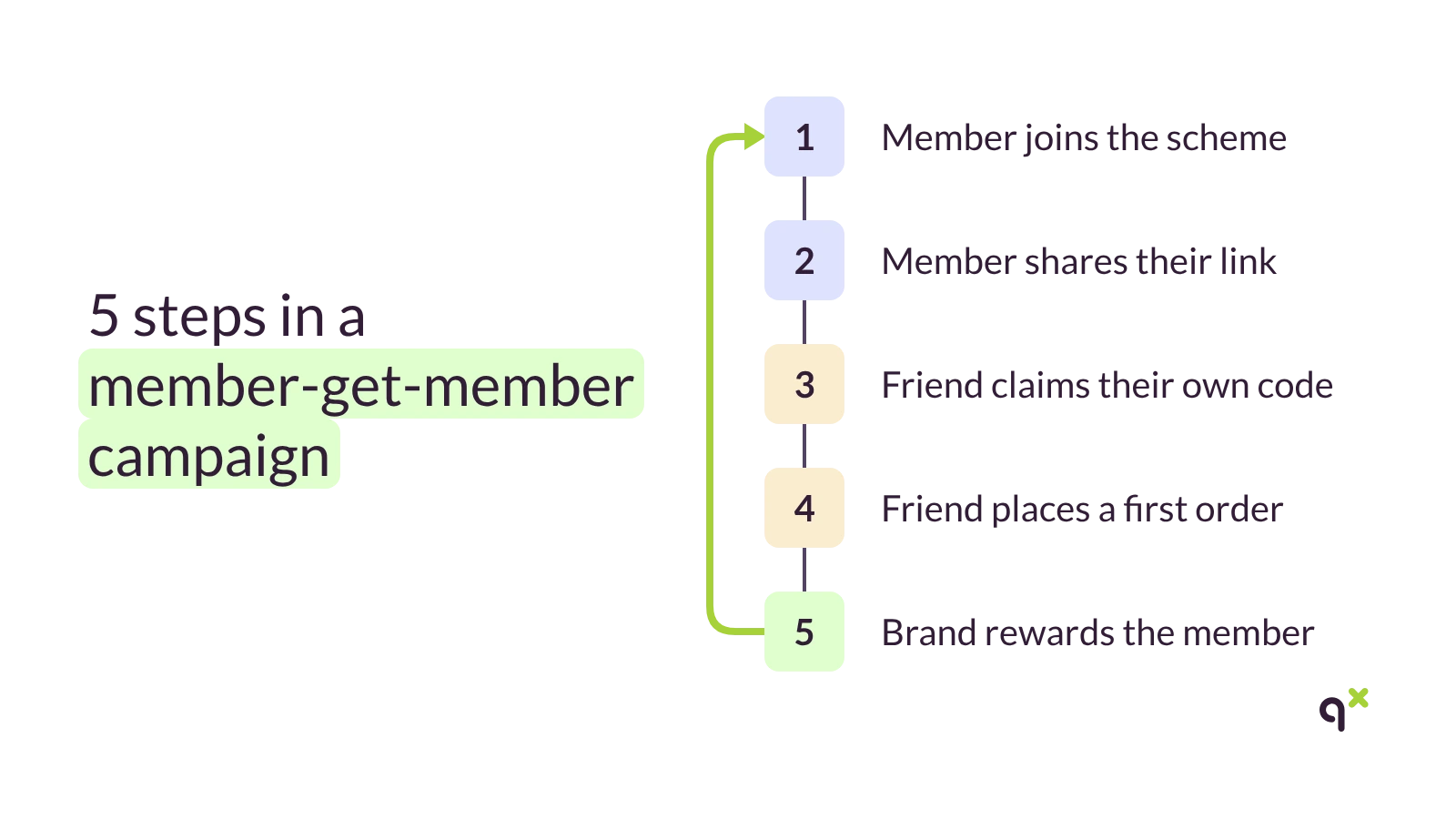
Each successful recommendation is an MGM referral. The member’s referral code or link is what ties that sale back to them. Rewards can be a discount, account credit or loyalty points, and in a two-sided scheme the friend gets a reward too.
Member-get-member and refer a friend are two names for the same mechanic: an existing customer recommends the brand and earns a reward when that recommendation turns into a sale or sign-up. Spellings vary, and you will also see member-get-a-member and member-gets-a-member.
The overlap matters for brands that run referral in more than one country. A Spanish or Italian team briefing an MGM campaign and a UK team briefing refer a friend need the same things from a platform: personal links or codes, rules on who qualifies and a record of which member referred which customer. Writing one set of requirements for both saves comparing referral vendors twice.
A member-get-member campaign only pays back when each reward follows a real recommendation, and that depends on how the codes are issued. If every member shares a code that works for anyone, it spreads beyond the friends it was meant for.
Once a shared code reaches a voucher site, strangers redeem it, the brand funds discounts for customers nobody referred and members can collect rewards for orders they had nothing to do with. That is coupon code leakage inside a referral scheme. Uniqodo gives each friend their own single-use code that only works for a new customer, so a copied code stops working after one redemption, and daily and overall limits per member cap how many codes one link can produce.
Uniqodo runs member-get-member schemes through its referral software, which brands can buy on its own and use with the promotions their ecommerce platform already supports. A branded overlay from Onsite Experiences invites customers to join at moments such as order confirmation. Each member gets a link to a Uniqodo-hosted friend page, where the friend enters an email address and receives their code.
Uniqodo issues the member’s reward once the friend completes an eligible purchase. Set-up is a quick JavaScript integration, or brands that want to build the front end themselves can use the Referral API.
In marketing, MGM stands for member-get-member, a referral scheme in which existing customers or members recommend a brand to people they know and earn a reward when those people join or buy. It is the same mechanic UK ecommerce brands call refer a friend, and some brands simply call it a referral programme.
The most visible member-get-member schemes come from banks, credit unions, gyms and clubs, where an existing member introduces someone and both receive a reward once the new person joins. Retail, travel and subscription brands run the same scheme for first orders and sign-ups, though UK brands tend to call it refer a friend.
A member-get-member scheme rewards existing customers for recommending a brand to people they know, usually with a discount, credit or points. Affiliate marketing pays publishers, creators and comparison sites a commission on the sales they drive under a commercial agreement. MGM relies on personal trust, while affiliate marketing relies on an audience the publisher has built.

Stop code leakage. Replace shareable generic codes with high-entropy unique strings. Protect your margins by ensuring discounts only apply to the intended audience under specific, validated conditions.

Execute complex campaigns. Move beyond basic discounts with multi-tiered rewards, product bundles, and discounts, all managed without waiting for a developer to clear your roadmap.

Convert with intent. Use real-time data to trigger onsite nudges or referral loops exactly when they matter. Create a unified journey that turns browsing interest into confirmed sales.

Scale partner sales. Automate the delivery of unique codes to thousands of partners instantly. Replace manual spreadsheets and CSV exports with secure, trackable API distribution.


We'll show you exactly how Uniqodo handles your use case - fraud controls, mechanic complexity, and ROI attribution included.