
A referral link is a unique web address given to each member of a referral programme. It carries an identifier for the customer who shared it, so when a friend clicks through and buys, the brand can credit the sale to the right person and pay the promised reward.
A referral link, sometimes called a referral URL or invite link, is the part of a refer-a-friend scheme that customers share. Ecommerce and subscription brands hand one out when a customer joins their referral programme, usually in the customer’s account, on the order confirmation page or in a follow-up email, ready to paste into a message or social post.
It looks like any other URL apart from the tag on the end, often a short code or ID added as a parameter, which tells the brand’s system who sent the visitor. Two customers sharing the same product page get two different links, because each one carries its own identifier. Referral links sit alongside promo codes, single-use codes and affiliate links in the promotion terms brands use to track sales.
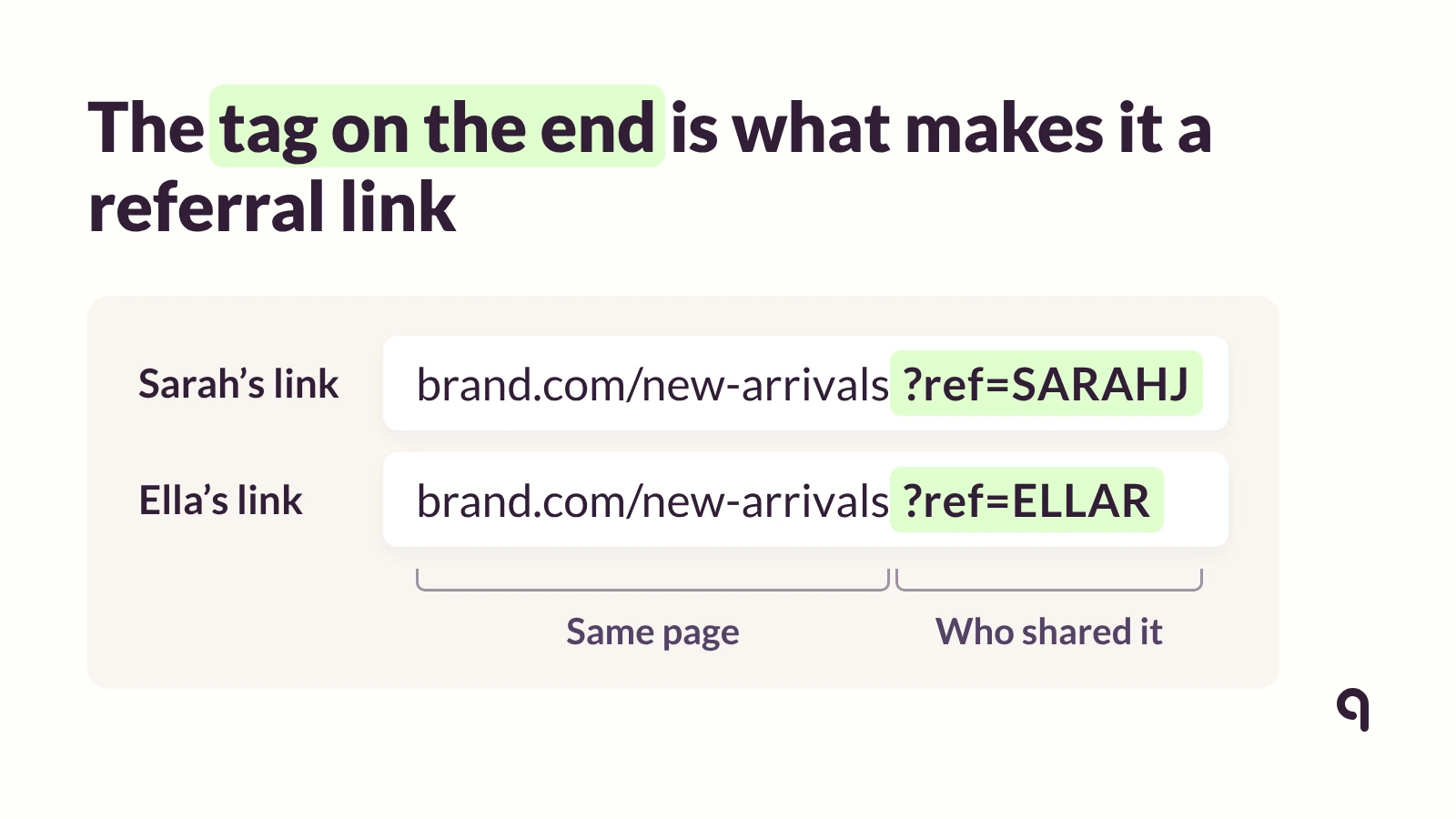
A referral link works by attaching the referrer’s identity to the friend’s visit and holding on to it until the friend buys.
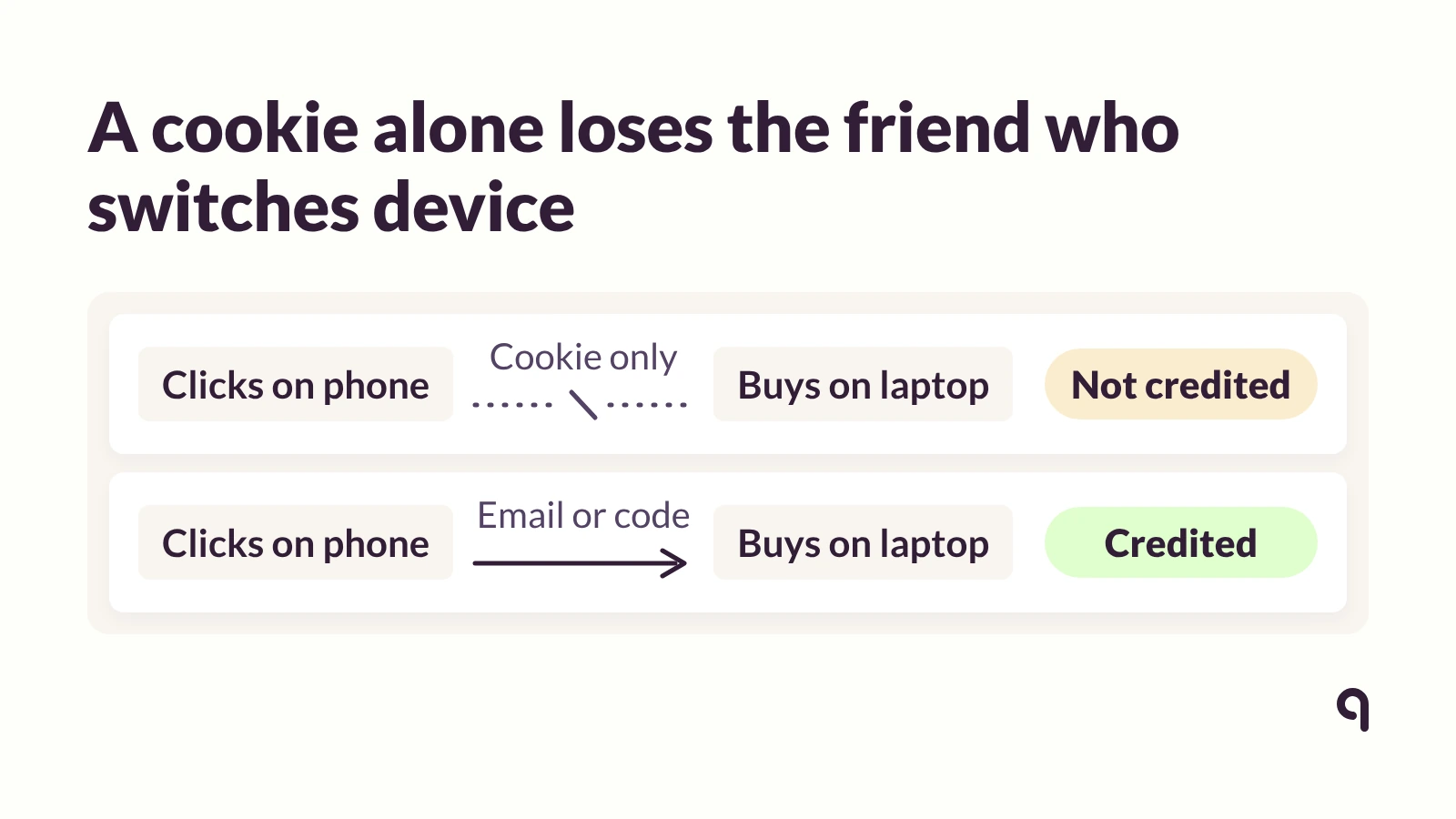
Step three is where a link can lose track. If the friend clicks on their phone and buys later on a laptop, clears their cookies or types the brand’s address in directly, a cookie on its own no longer connects the sale to the referrer. Links opened inside social apps such as Instagram run into the same problem, because the app’s browser keeps its own cookies. Capturing the friend’s email address on a landing page, or giving them a code to use at checkout, keeps the referral attached when that happens.
A referral link identifies the referrer the moment the friend clicks, while a code has to be entered at checkout and an affiliate link belongs to a paid partner rather than a customer. The three are often confused because they can all credit the same sale.
| Compared | Referral link | Referral code | Affiliate link |
|---|---|---|---|
| What it is | A unique URL carrying the referrer's identifier | A unique string the friend enters at checkout | A tracked URL issued to a publisher or partner |
| Who shares it | Existing customers | Existing customers | Publishers, creators and other paid partners |
| What the friend does | Clicks it | Types it in | Clicks it |
| What records the referral | The identifier, stored in a cookie or against an email address | The code itself, at checkout | The affiliate network's tracking, usually a cookie |
| Where it breaks | Device switches, cleared cookies and direct visits | Typos and leaks to voucher sites when the code is generic | Device switches, plus disputes over which partner gets the credit |
A referral code asks the friend to do something, and a link doesn’t. That makes the link easier to use and the code harder to lose, since a typed code still works after a change of device or a purchase in an app.
Many programmes use both. The link takes the friend to a page that names the referrer and explains the offer, and a code carries the discount through to checkout.
That split also decides how exposed the offer is. If the link applies the discount itself, anyone who finds it on a deal site can claim it. If the link hands each friend their own single-use code, a copy posted publicly stops working after one redemption.
Both are tracked URLs that credit a sale to whoever shared them. An affiliate link is paid for under a commercial agreement with a publisher or creator, and a referral link rewards a customer for recommending the brand to people they know. When a referral link or code turns up on a voucher site, one order can trigger an affiliate commission and a referral reward at the same time, which is where affiliate and referral marketing overlap.
Referral links decide where the reward budget goes. A link that loses track leaves genuine advocates unrewarded, and a link that travels too far pays out on sales nobody referred.
Timing affects whether customers share at all. The order confirmation page reaches them straight after a purchase, while an email can arrive days later. Uniqodo’s Onsite Experiences places the referral invitation in a branded overlay on pages such as order confirmation, so customers get their link while the purchase is still fresh.
Uniqodo’s referral software uses the link to identify the referrer and a code to protect the offer. Each referrer gets a link they can copy and share anywhere or send by email. It opens a branded friend page, where the friend enters an email address and receives a unique, single-use code that only works for a new customer and can carry an expiry date.
When the friend buys, the purchase is matched back to the referrer’s link, and the referrer is rewarded once the order counts as an eligible purchase. Daily and overall referral limits for each referrer, plus a cap on the rewards they can earn, restrict what one link can generate if it ends up somewhere public. The set-up is a quick JavaScript integration, with no promotion engine required.
Referral software creates one automatically for each customer who joins the programme, with that customer’s identifier built into the URL. Brands can build links by hand with URL parameters, but matching each order to its referrer and paying the right reward then becomes manual work that gets harder with every new member.
Yes. A referral link is usually reusable, so one customer can share it with as many friends as they like, and each friend’s visit is tracked separately. What the friend receives can still be single-use: many programmes issue each friend their own code, and limits per referrer cap how many rewards one link can earn.
It depends on the programme. The link often stays active for as long as the customer is a member, but two other limits run alongside it: the tracking window after a click and the expiry date on the friend’s offer. A friend who clicks today and buys after either has run out may not count as a referral.

Stop code leakage. Replace shareable generic codes with high-entropy unique strings. Protect your margins by ensuring discounts only apply to the intended audience under specific, validated conditions.

Execute complex campaigns. Move beyond basic discounts with multi-tiered rewards, product bundles, and discounts, all managed without waiting for a developer to clear your roadmap.

Convert with intent. Use real-time data to trigger onsite nudges or referral loops exactly when they matter. Create a unified journey that turns browsing interest into confirmed sales.

Scale partner sales. Automate the delivery of unique codes to thousands of partners instantly. Replace manual spreadsheets and CSV exports with secure, trackable API distribution.


We'll show you exactly how Uniqodo handles your use case - fraud controls, mechanic complexity, and ROI attribution included.