

The ecommerce promotion ideas that work best give shoppers a reason to buy now without discounting orders that would have happened anyway. Welcome offers, spend thresholds, free shipping, gifts with purchase, bundles, flash sales and partner codes all do that, as long as each one carries a rule on who can use it and when.
Most lists of ecommerce promotion ideas stop at the mechanic: run a flash sale, offer free shipping, send a welcome code. Picking the mechanic is the easy part. Whether a promotion adds sales or just gives away margin depends on the rules around it: who can redeem it, on which products, how often and for how long.
Each idea below comes with that rule. Seasonal campaigns use the same mechanics, and our Black Friday promotion ideas apply them to the busiest trading week of the year.
Ecommerce promotion ideas at a glance
Each idea pairs an incentive with a rule that stops it discounting orders you would have won anyway.
| Promotion idea | Best for | The rule that keeps it profitable |
|---|---|---|
| Spend thresholds | Raising average order value | First tier just above your current average order value |
| Free shipping | Removing the last cost at checkout | Threshold above average order value; exclude bulky, low-margin items |
| Gift with purchase | Adding value without cutting price | Tie it to a minimum spend or product line |
| Bundles and multi-buys | More units per order | Cheapest item free, narrow price band, minimum basket for cross-category bundles |
| Welcome offers | First orders and email sign-ups | One unique, single-use code per new subscriber |
| Closed-group offers | Price-sensitive audiences | Verified members only |
| Partner codes | Reaching partners' audiences | A separate pool of unique codes per partner |
| Flash sales | Urgency | Hard end time and redemption cap |
| Mystery discounts | Engagement | A controlled average discount |
| Behaviour-triggered offers | Shoppers about to leave | Baskets only, once per session, unique code |
What counts as an ecommerce promotion?
An ecommerce promotion is any offer that changes the price, value or terms of an order for a defined set of shoppers, products or channels, to win a sale that full price wouldn't. That covers percentage and fixed discounts, but also free shipping, gifts, bundles and early access.
Every promotion has two parts: the incentive the shopper sees and the conditions the checkout enforces. A code that anyone can find and use as often as they like has an incentive but no conditions. For planning a full promotions calendar, see our guide to ecommerce promotions best practices.
Why do the mechanics decide whether an ecommerce promotion pays?
How a promotion reaches shoppers and how long it stays open shape its results as much as the size of the discount. Across 90 merchants and 4,124 promotions in H1 2026, retail and fashion codes delivered by API converted 20.54% of validated codes, while email converted 7.67%, according to Uniqodo's coupon code statistics.
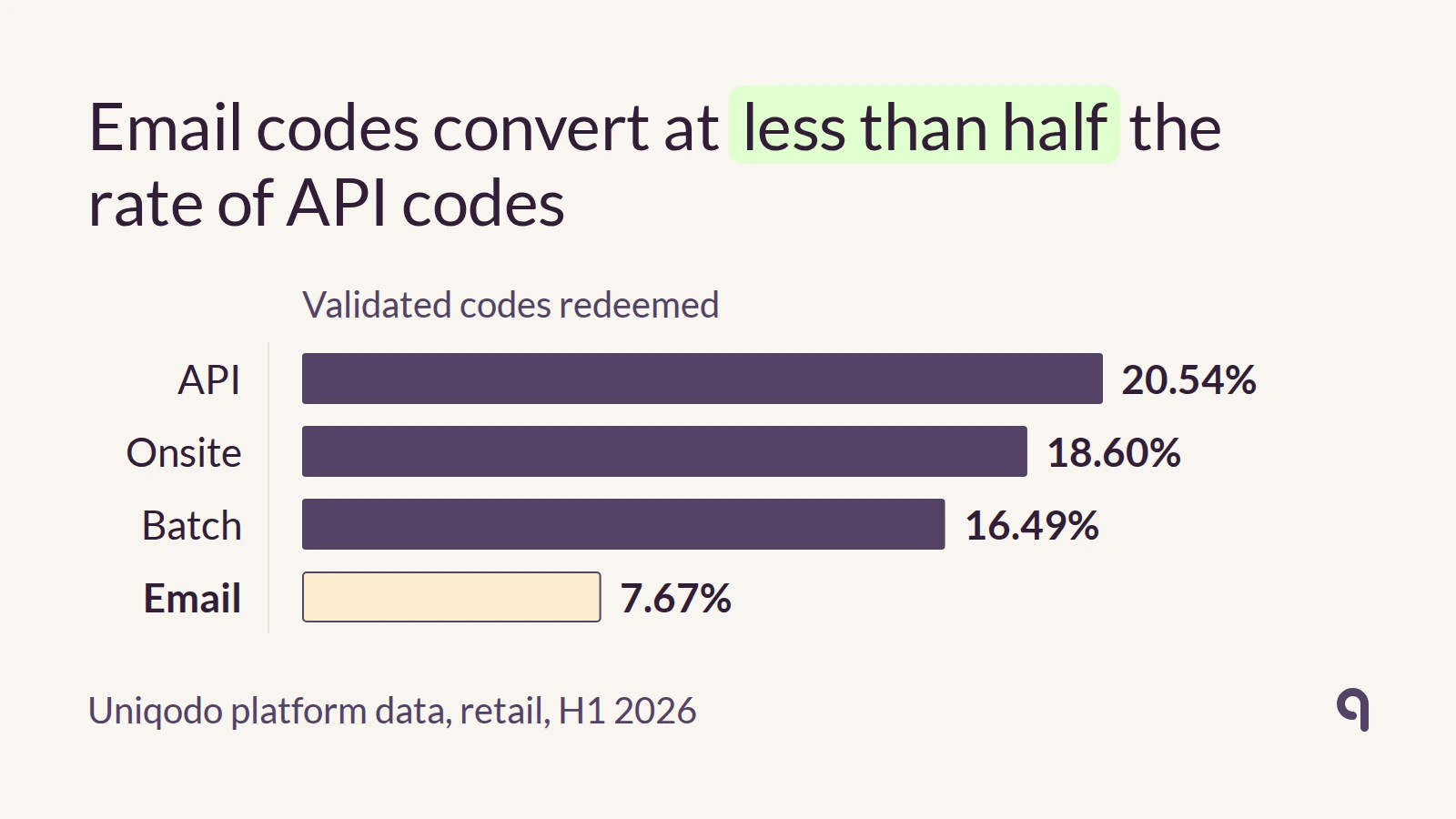
Shoppers also act fast. In the same data, 44.1% of non-batch redemptions came within the first hour of the code being issued, and the median time to redemption was 10 hours. A strong offer sent through the wrong channel converts poorly, and one left open with no limits tends to end up on voucher sites, which is why each idea below pairs the incentive with a delivery route and a limit.
200K new customers
Samsung's Black Friday Early Bird campaign gave eligible shoppers four incentive tiers, from 10% to 25% off, with each shopper's unique code filled in automatically at checkout. How Uniqodo won 200K new customers for Samsung
Which ecommerce promotion ideas raise average order value?
Promotions that raise average order value reward shoppers for adding to the basket, instead of cutting the price of what's already in it.
1. Spend thresholds that lift order value
A spend threshold rewards shoppers for adding to their basket: spend over a set amount and save more. Set the first threshold just above your current average order value, so the offer moves baskets up instead of rewarding orders that already qualify. Tiered discounts add a bigger reward at each step, which gives shoppers already close to the next tier a reason to add one more item. When a basket falls short, a custom error message can tell the shopper how much more to spend, so a failed code becomes a reason to add to the basket.
2. Free shipping above a threshold
Free shipping removes a cost shoppers notice at the last step of checkout. Put it behind a free shipping threshold set above your average order value, so it lifts basket size as well as conversion. Exclude bulky or low-margin items where the delivery cost would wipe out the gain.
3. Gifts with purchase instead of discounts
A gift with purchase adds a product to the order instead of taking money off it. Shoppers judge the gift by its retail price, while you carry only its cost, and the full price of everything else stays intact. Choose gifts that introduce a range you want people to try, and tie the gift to a minimum spend or a specific product line.
4. Bundles and multi-buys
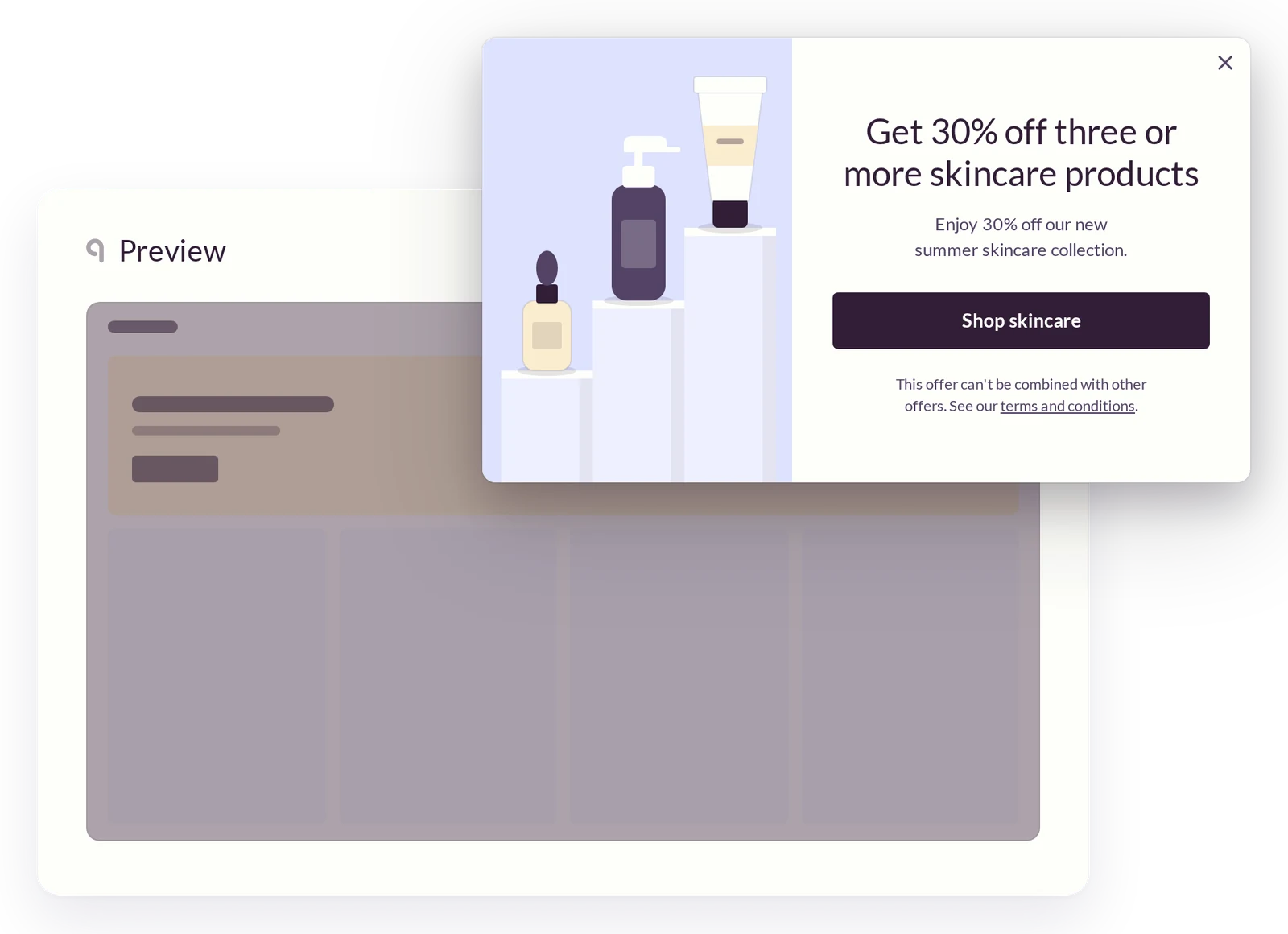
Bundles and multi-buys, such as buy one get one free or three for two, move more units per order and can clear slower-selling stock alongside bestsellers. Make the cheapest item the free or discounted one, and keep qualifying products within a narrow price band, or shoppers will pair your most expensive item with the cheapest to get the biggest saving. For cross-category bundles, add a minimum basket value so a low-cost add-on can't claim the discount on its own. These product bundling examples show the qualification rules behind each format.
Sales promotion ideas that win new customers
New-customer promotions work when the offer reaches people who haven't bought before and stays out of reach of those who have.
5. Welcome offers that only work once
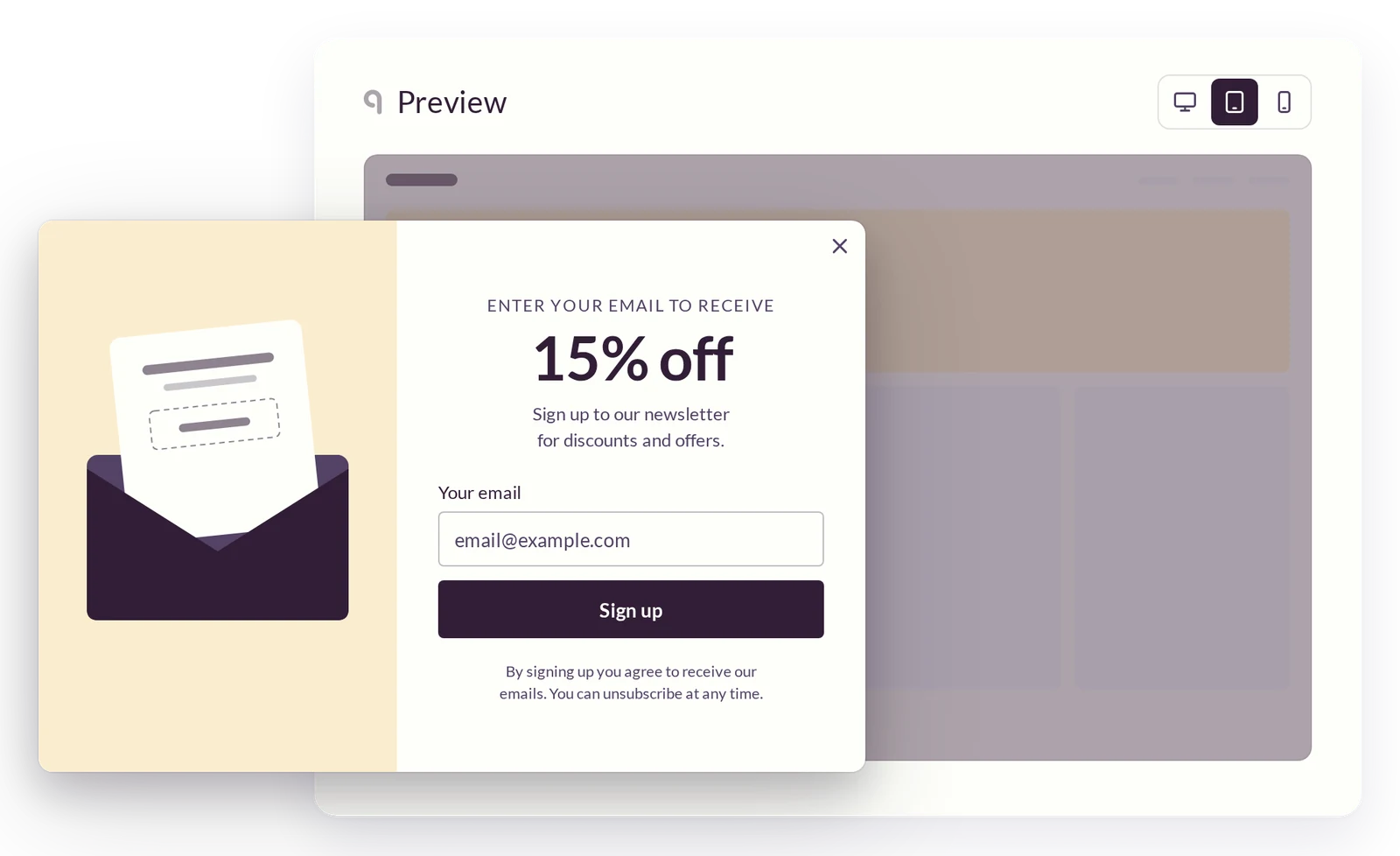
A welcome offer gives first-time shoppers a reason to place an order and gives you their email address in return. The risk is a single public welcome code, which spreads to voucher sites and gets used by existing customers. Issue a unique, single-use code to each new subscriber instead, so the offer stays with the new customers it was meant for.
6. Closed-group offers for students, key workers and employees
A closed user group offer is open only to verified members of a group, such as students, key workers or a partner company's staff. Verification keeps a deeper discount inside the group, so you can win price-sensitive audiences without cutting prices for everyone. Student and key worker discount schemes usually handle the verification and distribute the codes for you.
7. Exclusive codes for partners and affiliates
Exclusive partner codes give each affiliate, publisher or influencer an offer of its own to promote. One shared code undermines that: it spreads to other voucher sites, and you can't tell which partner drove the sale. A separate pool of unique codes for each partner keeps the offer exclusive and, with coupon tracking by partner, shows which ones actually produce orders.
Promotional campaign ideas that create urgency
Urgency promotions give shoppers a reason to decide now, and each one needs a limit that stops the offer outliving its moment.
8. Flash sales with a hard cap
A flash sale works because the deadline is real. Set a hard end time and a redemption cap, so the offer closes when the stock or budget runs out rather than when someone remembers to switch it off. Keep the code out of public channels until the sale starts, so voucher sites can't list it early.
9. Mystery discounts that turn the offer into a game
A mystery discount gives each shopper a personal code whose value is only revealed at checkout. It borrows the pull of gamification campaigns without building a game, because the reveal itself is the hook. The rule that makes it work is a controlled average: Uniqodo's engine spreads the values so the average discount stays at the level you set, while some shoppers get a bigger surprise. Our piece on mystery discounts explains why the reveal at checkout keeps shoppers moving.
10. Behaviour-triggered offers for shoppers about to leave
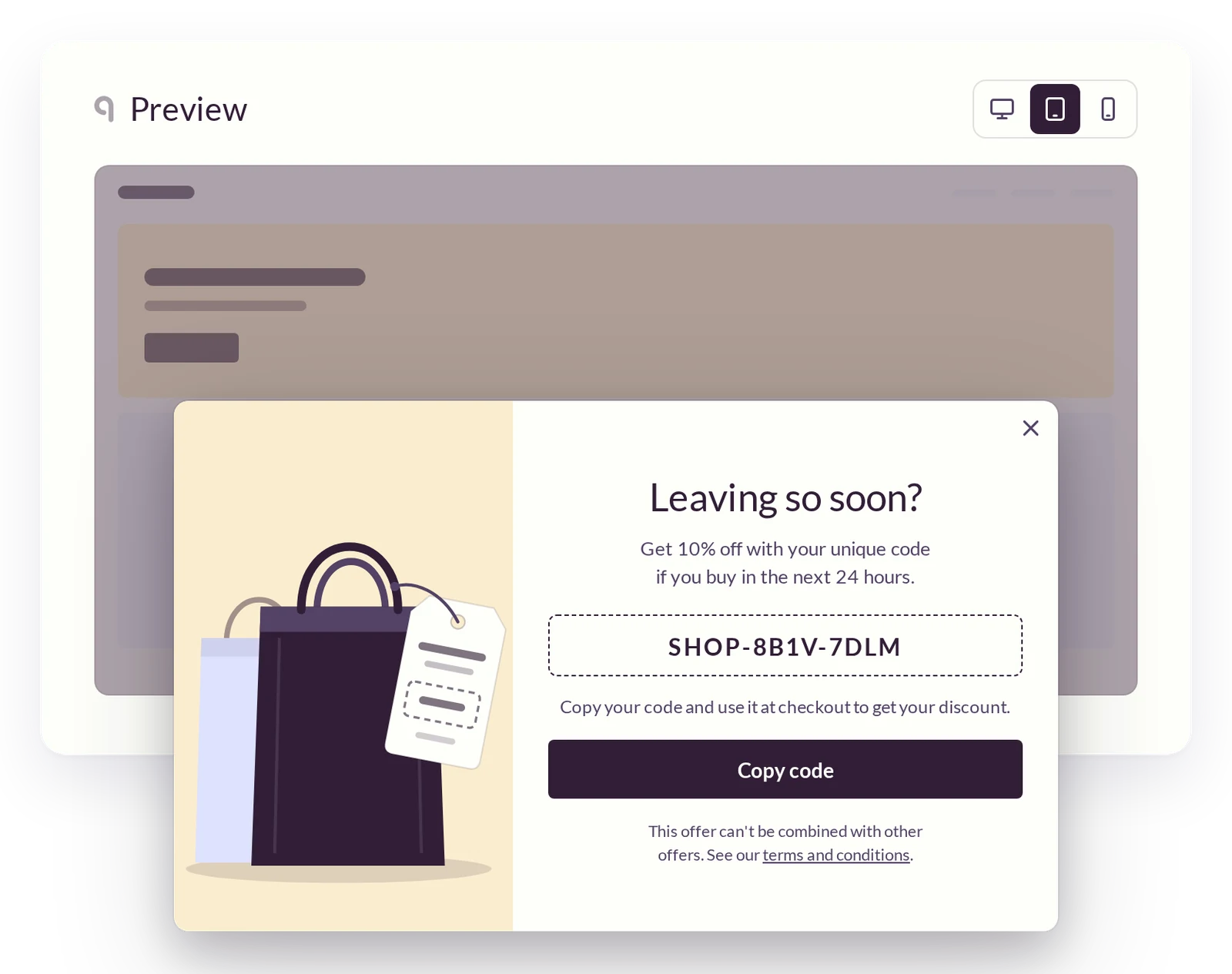
An onsite offer triggered by behaviour reaches shoppers at the moment they're deciding whether to buy. Exit intent fires when a shopper moves to leave the page. A copy-and-highlight trigger fires earlier, when a shopper copies a product name or price, which usually means they're about to compare prices or hunt for a code elsewhere.
Show these offers only to shoppers with items in their basket, once per session, and pair them with a unique code so the offer can't be reused. Our guide to reducing cart abandonment with onsite promotions covers the other triggers worth testing.
Which ecommerce promotion mistakes cost the most?
The costliest ecommerce promotion mistakes give away discount on orders that would have happened anyway.
- Running one public code everywhere. A single generic code spreads to voucher sites and browser extensions, and shoppers who were already buying use it.
- Leaving promotions open-ended. With no end date or redemption cap, an offer built for one campaign keeps running long after the campaign is over.
- Putting a discount in the first abandoned-basket email. Many shoppers come back on their own, and an instant discount pays them for something they were going to do anyway, while teaching them to abandon for a code.
- Letting offers combine by accident. A welcome code on top of a sale price and free shipping can take an order below cost, so decide before launch which promotions can be used together.
- Judging a promotion on redemptions alone. A deeper offer usually converts more, so compare order value and margin as well as the number of codes used.
How Uniqodo runs ecommerce promotions
Uniqodo is the promotion layer between an online store's checkout and its marketing channels. The Promotion Engine sets who can use each offer, on which products and how often, with redemption caps, qualification rules and unique, single-use codes for every shopper, email or partner.
“Having Uniqodo has given us flexibility to create and test our customer offers. The system protects the discounts we want to give, so it’s easier to agree promotions internally, even if we’re giving away a larger margin to a selected group.”
Sian Worthington, Affiliate Strategy Manager, N Brown Group
Onsite Experiences put offers on the site itself, through sign-up offers, exit-intent overlays and code reminders, so shoppers see the promotion at the moment they decide. Uniqodo connects to checkout through a one-time API integration. Once integrated, marketers set up and launch promotions themselves. If you're comparing platforms, our roundup of the best promotion engines for retail sets the main options side by side.
FAQs: ecommerce promotion ideas
What is the most effective ecommerce promotion?
No single promotion works best for every store. Free shipping thresholds and spend tiers raise order value, welcome offers win first orders and exclusive partner codes reach new audiences. The most effective promotion is the one matched to a specific goal and limited by clear rules on who can use it, on what and for how long.
How often should an online store run promotions?
Often enough to give shoppers a reason to buy, but not so often that full price stops looking credible. Many stores run an always-on welcome offer, a handful of planned seasonal campaigns and targeted offers for specific groups in between, rather than a site-wide discount every week.
How do you stop promotion codes leaking online?
Issue unique, single-use codes instead of one shared code, so each code works for a single order. Add rules on who can redeem it, set an expiry date and a redemption cap, and give each partner its own pool of codes, so any code that does leak can only be used once.

Jenna Tyler
Director of Customer Operations