

The best Talon.One alternatives depend on your team's technical setup and promotional complexity. Uniqodo is the strongest fit for enterprise commercial teams that need a marketer-friendly promotion engine, unique code distribution, and onsite personalisation without raising a dev ticket for every campaign change. Voucherify suits developer-led teams who want API-level control. LoyaltyLion, Antavo, and Smile.io are loyalty-focused. Braze operates at the messaging layer.
Talon.One is a well-regarded promotion engine trusted by brands including Adidas, Sephora, and Carlsberg, and since July 2026 it has been part of Adyen. But it is not the right fit for every team. Whether you need a platform with less developer dependency, stronger onsite personalisation, a different commercial model, or a promotion layer that sits apart from your payment provider, this guide covers six alternatives worth evaluating in 2026.
1. Uniqodo: Best for Enterprise Marketing Teams Running Complex Multi-channel Promotions Without Developer Dependency
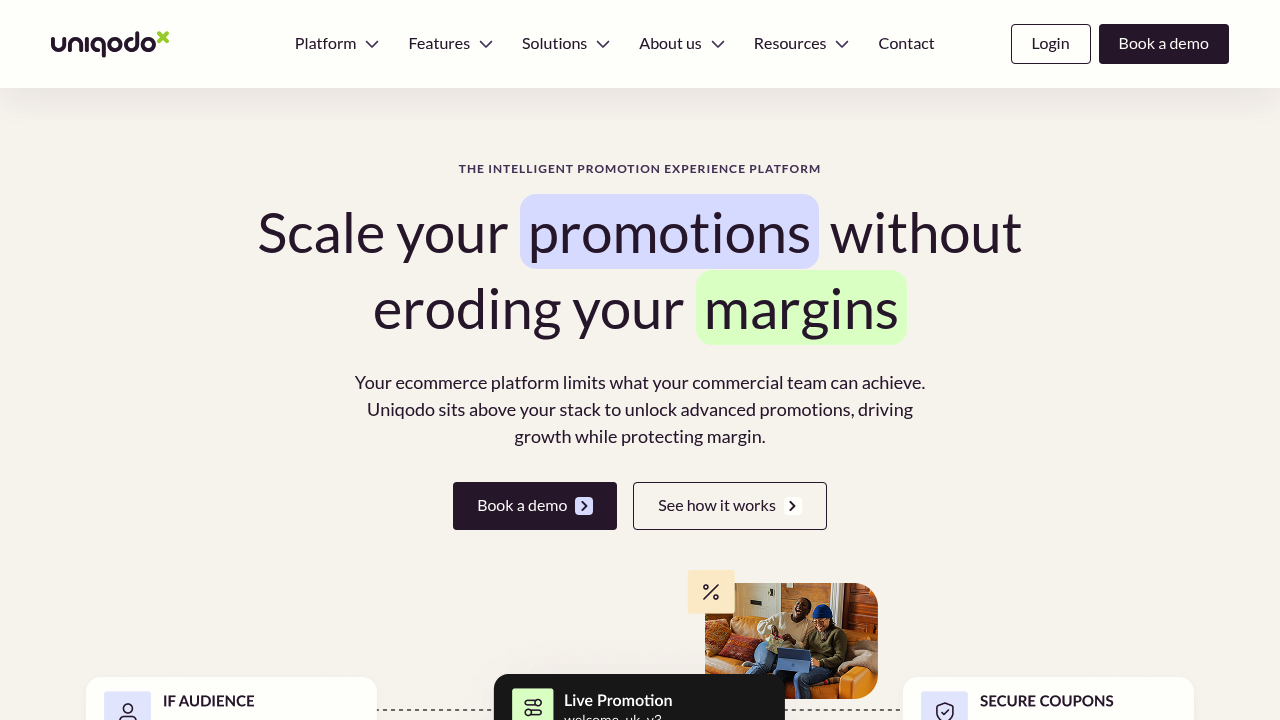
What it does well: Uniqodo is an Intelligent Promotion Experience Platform that sits above a brand's existing ecommerce stack. Its defining strength is that the platform is built for marketers, not developers: once the API integration is in place, marketing teams build, launch, and modify complex promotions themselves, from product bundles and tiered discounts to brand-specific offers, unique single-use codes, partner journeys, and referral programmes, without raising a single engineering ticket.
Uniqodo's platform is made up of five products: Promotion Engine, Onsite Experiences, Code Distribution, Referral, and Loyalty.
Key capabilities include:
- Promotion management with a wide range of incentives tailored to your marketing objectives, from simple discounts to product bundle rewards.
- Single-use and dynamically generated coupon and discount codes with full validation rules covering eligibility, usage limits, timing, and product or category restrictions and more
- Coupon code distribution across email, onsite placements, mobile apps, social channels, and partner networks including AWIN, CJ Affiliate, and Impact
- Loyalty and referral programme management integrated with promotion workflows
- Optional managed service support for designing and implementing complex promotion setups
- Reporting on redemptions and customer interactions across every channel, and unique codes deliverable into any CRM or email platform via an embeddable widget, no integration required
Best for: Enterprise retail, travel, and utilities brands whose commercial and marketing teams need to run sophisticated promotions, including tiered discounts, partner-distributed codes, and personalised offers, without depending on engineering resource for every campaign change.
See the Uniqodo Promotion Experience Platform to see how the five products fit together.
2. Voucherify: Best for Developer-Led Promotion Builds
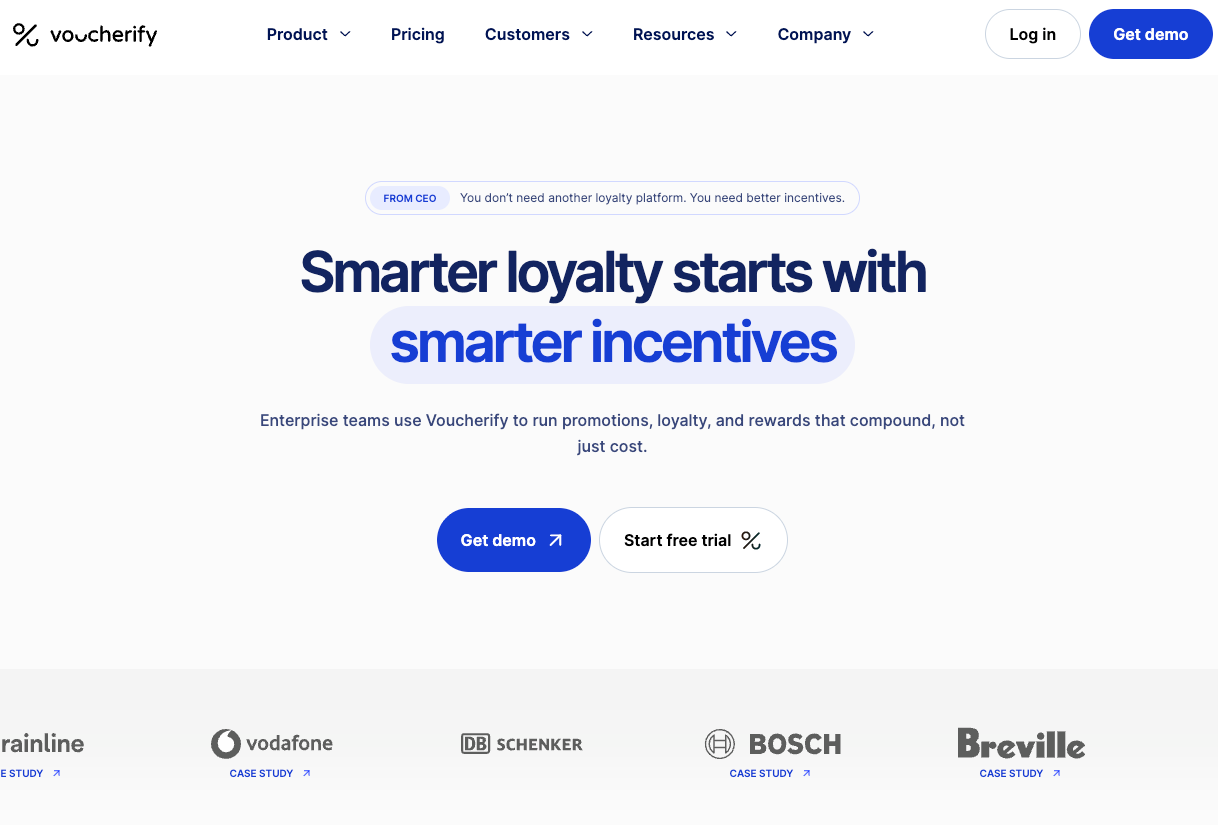
What it does well: Voucherify is an API-first promotion and loyalty engine that covers coupons, referrals, gift cards, loyalty programmes, and gamification. It is well-regarded for its breadth of feature coverage and a developer experience that gives engineering teams precise control over how promotions are structured and triggered. Its feature scope overlaps significantly with Talon.One, which is why it appears frequently in comparison discussions.
Best for: Brands with strong in-house engineering teams who want to build highly customised promotion logic on top of a flexible API layer, particularly in retail, ecommerce, and hospitality.
Where Uniqodo differs: Uniqodo is built for commercial and marketing teams who need to run complex promotions without writing code or raising a development ticket. Where Voucherify puts control in the hands of engineers, Uniqodo's visual promotion rule builder puts it in the hands of the marketers running the campaigns, so promotions launch in hours rather than waiting in a dev backlog for weeks. Voucherify distributes codes through a brand's own channels and connected tools, such as email, SMS, and Braze. It doesn't run a publisher distribution network, so getting unique codes to affiliate, cashback, and closed-user-group partners with attribution intact means building and maintaining those connections separately. Uniqodo distributes codes to those partners natively, which matters most for brands where partner channels drive a large share of new customers.
For a fuller comparison, see our guide to the best Voucherify alternatives in 2026.
3. LoyaltyLion: Best for Ecommerce Loyalty Programmes
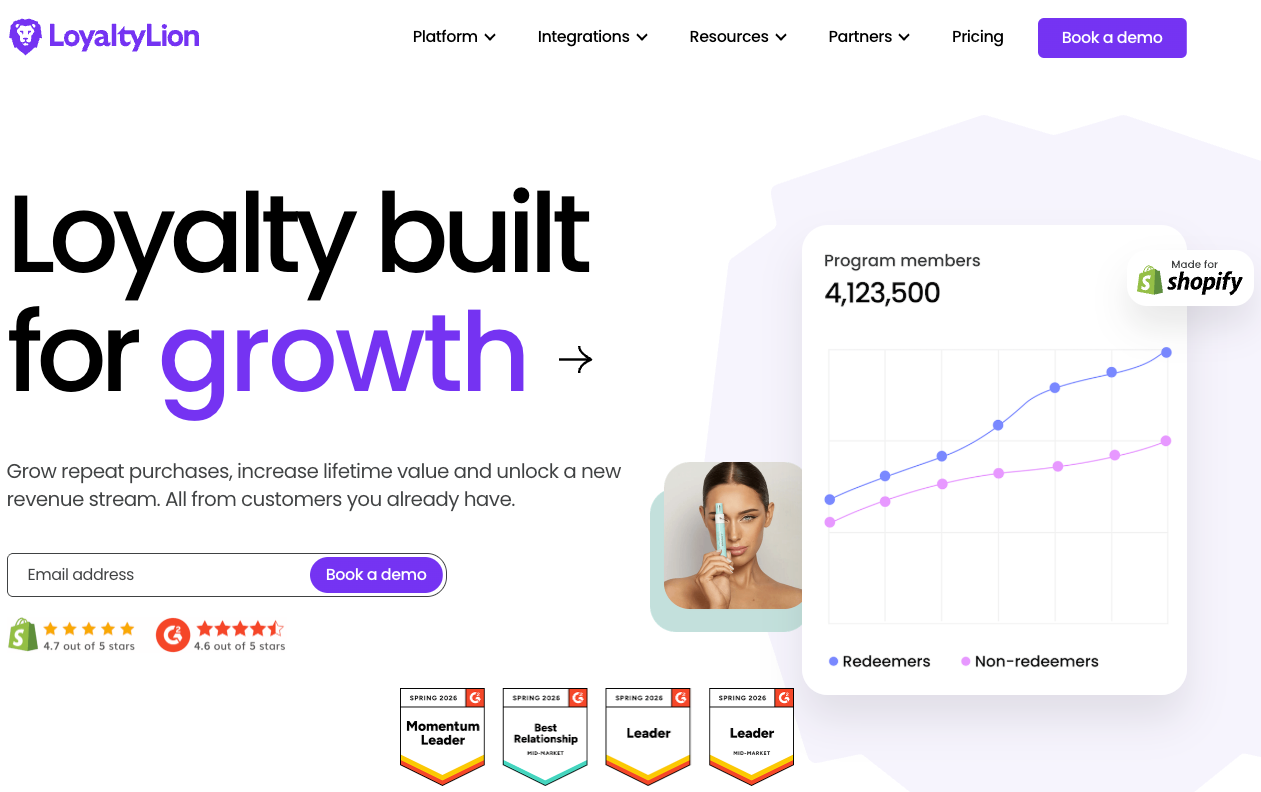
What it does well: LoyaltyLion is one of the most widely reviewed loyalty platforms in the market, rated 4.6 out of 5 stars from 580+ reviews on G2. It integrates with major ecommerce platforms and offers more than 100 features covering points, tiers, referrals, and rewards. Reviewers consistently praise it for usability and customer support.
Best for: Mid-market ecommerce brands looking to build and manage a points-based loyalty programme with minimal technical setup, particularly those running on Shopify or similar platforms.
Where Uniqodo differs: LoyaltyLion is a strong loyalty-first solution. Uniqodo is a broader promotion experience platform that covers loyalty alongside coupon management, unique code generation, referral programmes, onsite experiences, and fraud prevention, all within a single platform. For brands whose promotional needs extend beyond loyalty points, that means one platform and one reporting view instead of stitching together separate tools.
4. Antavo: Best for Enterprise Loyalty Strategy
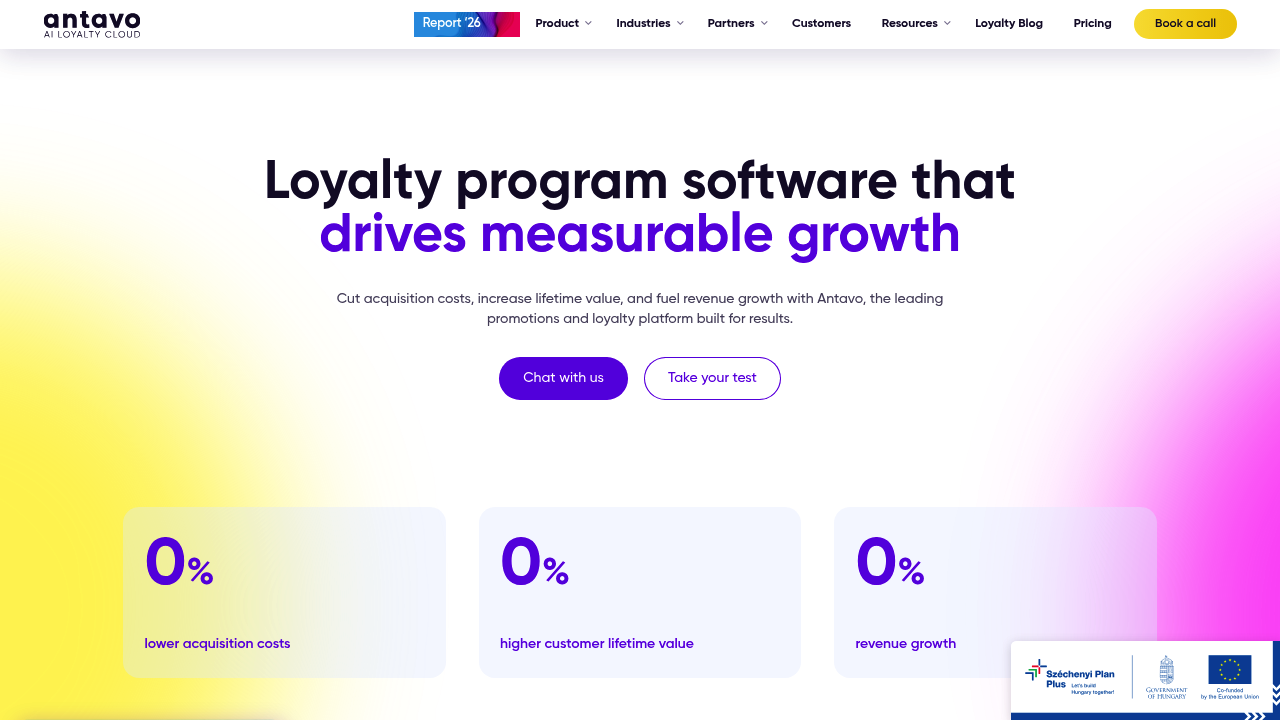
What it does well: Antavo is an enterprise-grade loyalty cloud recognised in Gartner's 2025 Market Guide for Loyalty Programme Vendors. It is built around structured loyalty programme design, including AI-powered tier management, experiential rewards, and in-store loyalty capabilities. It is a focused, loyalty-specific platform with deep programme design tools.
Best for: Large enterprises that want a dedicated loyalty platform with sophisticated programme architecture and a team of loyalty strategists to support implementation.
Where Uniqodo differs: Antavo is a dedicated loyalty platform. Uniqodo is a modular promotion experience platform where loyalty is one component alongside promotion logic, code distribution, referrals, and onsite experiences. For brands that need loyalty as part of a broader promotional strategy rather than as a standalone programme, Uniqodo lets them build outward from whichever module they need first.
5. Braze: Best for Cross-Channel Customer Engagement
What it does well: Braze is an enterprise customer engagement platform built for real-time, cross-channel messaging across email, push, SMS, and in-app. It is trusted by global brands and recognised for its ability to trigger personalised communications based on live customer behaviour. Brands use it to connect promotional events, like coupon redemptions or loyalty milestones, to automated messaging flows.
Best for: Enterprise marketing teams that need a sophisticated messaging layer to deliver promotions and loyalty communications across multiple channels at scale.
Where Uniqodo differs: Braze is a messaging and engagement platform. Uniqodo is a promotion engine. The two serve different parts of the stack. Uniqodo handles the logic, code generation, fraud prevention, and onsite promotion experience, and integrates with engagement platforms like Braze to deliver those promotions through the right channel at the right moment.
6. Smile.io: Best for SMB Rewards Programmes
What it does well: Smile.io is one of the most accessible loyalty and rewards platforms available, rated 4.6 out of 5 stars on G2 from 430+ reviews. It is consistently praised for ease of setup, ease of administration, and usability. It offers a no-code rewards programme builder covering points, referrals, and VIP tiers, with a free plan and paid plans priced by monthly order volume.
Best for: Small to mid-sized ecommerce businesses that want a rewards programme up and running quickly, without developer involvement or a large implementation budget.
Where Uniqodo differs: Smile.io is a strong fit for smaller brands that want a rewards programme live quickly. Enterprise promotions tend to need rules a plug-and-play rewards app isn't designed for: eligibility by customer segment, usage limits per customer and per code, product and category restrictions, and single-use codes that can't be shared. If your campaigns depend on that level of control, you'll outgrow a rewards tool.
Other Talon.One Alternatives Worth Knowing
Several other platforms come up in Talon.One comparisons on review sites such as Gartner Peer Insights and TrustRadius. PAR Punchh focuses on loyalty for restaurants and convenience retail. White Label Loyalty offers a configurable loyalty platform for mid-market and enterprise brands. Shopify-native apps such as Rivo suit direct-to-consumer brands that want loyalty, referrals, and memberships inside Shopify. We left them out of the main list because each serves a narrower segment than the tools above.
How Do These Alternatives Compare to Talon.One?
Talon.One is a well-built promotion engine with a strong enterprise client base and a broad feature set covering coupons, discounts, loyalty, and referral programmes. It is API-first, which gives developers significant flexibility, and it is recognised in both Gartner's 2025 Market Guide for Loyalty Programme Vendors and IDC's 2024 MarketScape for Loyalty Software Providers. Since 1 July 2026 it has been owned by Adyen.
The alternatives in this list differ from Talon.One in the following ways:
- Uniqodo combines promotion engine capabilities with onsite experience, code distribution, referrals, and loyalty in one platform, with a visual rule builder and onsite experience tools that give marketing teams direct control over both promotion logic and customer-facing execution after integration.
- Voucherify offers comparable API-first feature coverage with a different commercial model
- LoyaltyLion focuses specifically on ecommerce loyalty with stronger out-of-the-box platform integrations.
- Antavo goes deeper on loyalty programme design for large enterprises with dedicated loyalty strategy support.
- Braze operates at the engagement and messaging layer rather than the promotion logic layer.
- Smile.io serves smaller brands that need a fast, affordable rewards programme without complexity.
The right choice depends on your team's technical capability, the complexity of your promotional campaigns, and whether you need a point solution or a platform that covers the full promotion experience.
Why Do Businesses Look for Talon.One Alternatives?
Talon.One is a capable promotion engine, but its architecture and commercial model introduce specific friction points depending on how a team operates. Enterprise commercial and marketing teams typically look for alternatives for five reasons:
Developer dependency for frontend execution.
Talon.One's backend rule builder lets teams configure promotion logic, but because the platform is headless, it has no presentation layer. That means marketing teams cannot launch onsite visual elements, such as basket reminders, countdown timers, or exit-intent overlays, without developer involvement. New custom data points and frontend integrations also require engineering. In practice, promotion logic can sit ready in a dashboard while the customer-facing execution remains queued behind the engineering backlog.
No native publisher code distribution.
Talon.One distributes promotions through a brand's existing martech stack, but it does not offer a built-in publisher distribution network. Brands that need to distribute unique codes securely across affiliate channels, cashback partners, and closed-user groups have to build and maintain custom integrations to manage that distribution and attribution. For teams running promotions through dozens of external partners, that gap adds operational overhead and limits reach.
Pricing that scales with data volume, not results.
Talon.One prices its plans on data volume rather than on what a campaign earns. For high-traffic retail and travel brands, seasonal peaks raise the volume processed whether or not that traffic converts, which makes costs harder to forecast against campaign ROI.
Separate tooling for onsite experience.
Talon.One handles promotion rules, but it does not manage how those promotions are presented to customers on the site itself. Brands that want personalised onsite experiences connected to their promotion logic, such as code reminders, abandonment recovery, or targeted offers based on basket contents, typically need a separate vendor. That adds another integration, another contract, and a gap between promotion logic and what the customer actually sees.
A new owner with a payments-led roadmap.
Adyen completed its €750 million acquisition of Talon.One on 1 July 2026 and has begun integrating it into its payments platform. Adyen's stated rationale is to combine its transaction data with Talon.One's decisioning, so promotions can be applied in the cart based on who the shopper is. For merchants already processing with Adyen, that may be useful. For teams on a different payment provider, or running several, it raises questions worth putting to Talon.One directly: how the standalone product will be prioritised, whether new features will depend on Adyen payments data, and how renewal terms might change.
The alternatives in this guide each address one or more of these friction points from a different angle.
How We Chose These Talon.One Alternatives
Each platform in this list was evaluated against criteria that matter to enterprise commercial and marketing teams:
- Promotion capability: Does the platform support complex promotion types, including tiered discounts, unique codes, bundles, referrals, and loyalty?
- Marketing team autonomy: Can non-technical users build and adjust campaigns without raising a development ticket?
- Fraud and margin protection: Does the platform have mechanisms to prevent code abuse and protect promotional budgets?
- Integration approach: Does the platform connect cleanly to existing ecommerce stacks and messaging tools?
- Enterprise fit: Is the platform designed for the scale, compliance, and operational complexity that enterprise brands face?
Platforms were included based on their presence in verified review sources (G2, Gartner, Capterra) and their relevance to the use cases most commonly associated with Talon.One evaluations.
Finding the Right Talon.One Alternative for Your Team
The right Talon.One alternative depends on where the friction sits. If the bottleneck is developer dependency for getting promotions live on your site, a platform built for marketer self-serve after integration will outperform one that requires engineering for frontend execution. If the gap is code security, partner distribution, or onsite personalisation, that narrows the field to platforms where those capabilities are built in rather than bolted on. If your primary need is a dedicated loyalty programme or a lightweight rewards tool, the loyalty-focused platforms in this guide will be the better fit.
Every platform listed here serves a genuine use case. The comparison table and breakdowns above should give you enough to shortlist two or three options worth evaluating against your stack, your team structure, and your promotion volumes.
If Uniqodo looks like the right fit, book a demo to see the Promotion Engine, code distribution network, and onsite experiences in action. If it's not the right fit, this guide should have pointed you toward what is.
Talon.One Alternatives: FAQs
Who owns Talon.One?
Adyen, the Dutch payments company, owns Talon.One. Adyen agreed the €750 million acquisition in April 2026, completed it on 1 July 2026, and is now integrating Talon.One into its payments platform. If you use a different payment provider, ask Talon.One how its roadmap and renewal terms apply to your setup.
How much does Talon.One cost?
Talon.One doesn't publish prices. It sells three packages (Starter, Professional, and Enterprise), all priced on data volume with no limit on API calls, and quotes are available on request. Uniqodo prices on conversions, so costs scale with revenue generated rather than platform activity. Pricing models vary across the category, so request quotes from several vendors.
Is Uniqodo a good alternative to Talon.One for enterprise brands?
Yes. Uniqodo is built for enterprise commercial and marketing teams that need to run sophisticated promotions without raising a dev ticket for every campaign change. Where Talon.One is API-first and developer-led, Uniqodo gives marketing teams direct control over promotion logic, code distribution, onsite experiences, and fraud prevention through a single platform.
What should I look for in a Talon.One alternative?
Whether it supports your promotion types, how much engineering resource it requires day-to-day, how it handles code fraud, whether it connects to your partner and affiliate channels, and total cost of ownership at your campaign volume.

Jenna Tyler
Director of Customer Operations