

The best Voucherify alternative depends on your team's technical setup and promotional goals. Uniqodo is the strongest fit for enterprise commercial teams that need a marketer-friendly promotion engine, personalised promotions, code security and unique code distribution, with marketers setting up campaigns themselves once integrated. Talon.One, owned by Adyen since July 2026, suits enterprise teams that want a single rule engine for complex logic. LoyaltyLion and Smile.io are strong picks for Shopify-native loyalty programmes. Antavo works well for out-of-the-box loyalty workflows.
1. Uniqodo: Enterprise marketing teams running complex multi-channel promotions without developer dependency
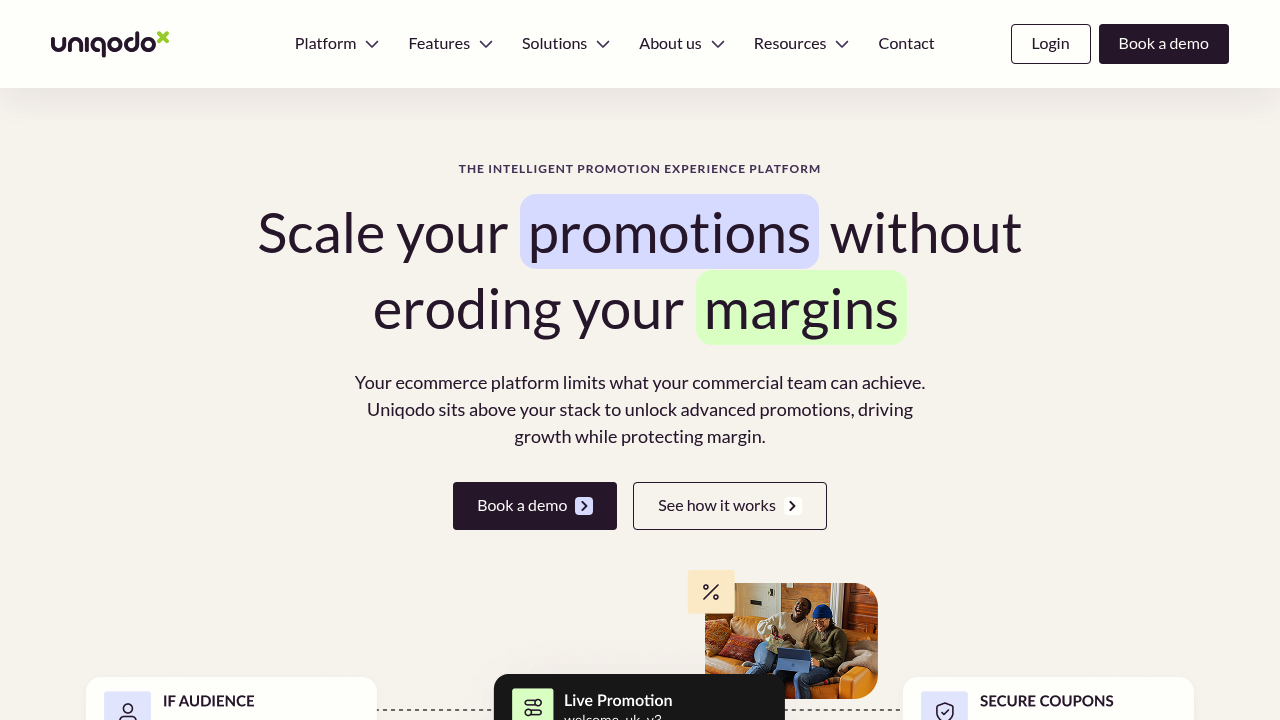
What it does well: Uniqodo is an Intelligent Promotion Experience Platform that sits above a brand's existing ecommerce stack. It connects five products in one modular platform: Promotion Engine, Onsite Experiences, Code Distribution, Referrals, and Loyalty. Enterprise commercial and marketing teams use it to build, distribute, and validate complex promotions, including product bundles, tiered discounts, unique codes, and partner journeys, with marketers configuring and launching campaigns independently once the initial integration is complete with an easy-to-use interface.
Best for: Enterprise retail, travel, and utilities brands that need to run advanced promotions across partner networks and onsite channels while protecting margins and eliminating code fraud. Clients include BT, EE, Boots, Avis, and TUI.
Standout capabilities:
- Promotion management with a wide range of incentives tailored to your marketing objectives, from simple discounts to product bundle rewards.
- Unique code generation and validation to eliminate coupon leakage in affiliate and partner channels
- Onsite experience tools that let marketers personalise promotion display and reduce basket abandonment directly, without raising a dev ticket for each campaign.
- A modular structure that lets teams start with one product and expand without switching platforms
- Partner integrations with AWIN, CJ Affiliate, Impact, and Blue Light Card through the partners network
If your team is evaluating Voucherify competitors and needs a platform that goes beyond code management into the full promotion journey, from distribution through to onsite conversion, book a demo with Uniqodo to see how it fits your stack.
2. Talon.One: Best for Rules-Based Promotion Logic at Scale
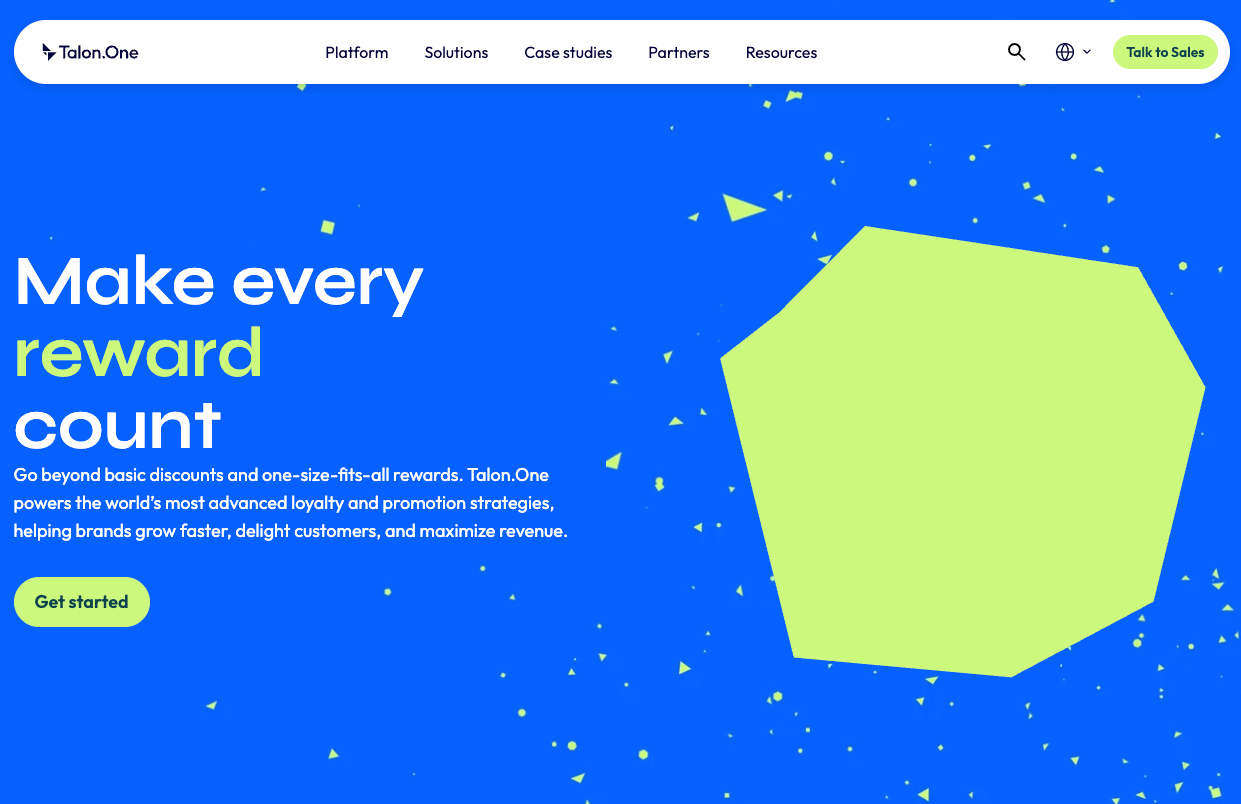
What it does well: Talon.One is a well-regarded promotion and loyalty engine built for enterprise teams that need to manage complex promotional logic across multiple channels. Its single rule-tree builder gives developers and technical marketers fine-grained control over campaign conditions, effects and eligibility. Brands like Adidas and Sephora have used it for large-scale incentive programmes. In July 2026 it was acquired by Adyen, the Dutch payments company, in a transaction valued at €750 million.
Best for: Enterprise teams with dedicated engineering resource that want a unified rule engine ffor promotions, loyalty and referrals across a custom tech stack, particularly merchants already processing payments with Adyen.
Where Uniqodo differs: Uniqodo is built for commercial and marketing teams that need to launch and manage complex promotions without requiring engineering involvement at every step. Where Talon.One is optimised for developer-led implementation, Uniqodo's Promotion Engine is designed so that once integrated, marketers configure and launch campaigns directly, without raising a ticket for each one. Talon.One has no onsite presentation layer and no native infrastructure for publisher and affiliate code distribution, so both are built or sourced separately. Uniqodo includes Onsite Experiences and Code Distribution alongside its Promotion Engine. Since the Adyen acquisition, Talon.One's roadmap also sits inside a payments company, so buyers on a different payments stack should ask how platform-neutral it will remain. For teams that need promotion logic, partner distribution and onsite delivery together, that removes a second vendor and the integration work between them.
For a fuller comparison, see our guide to the best Talon.One alternatives in 2026.
3. LoyaltyLion: Best for Shopify Loyalty Programmes
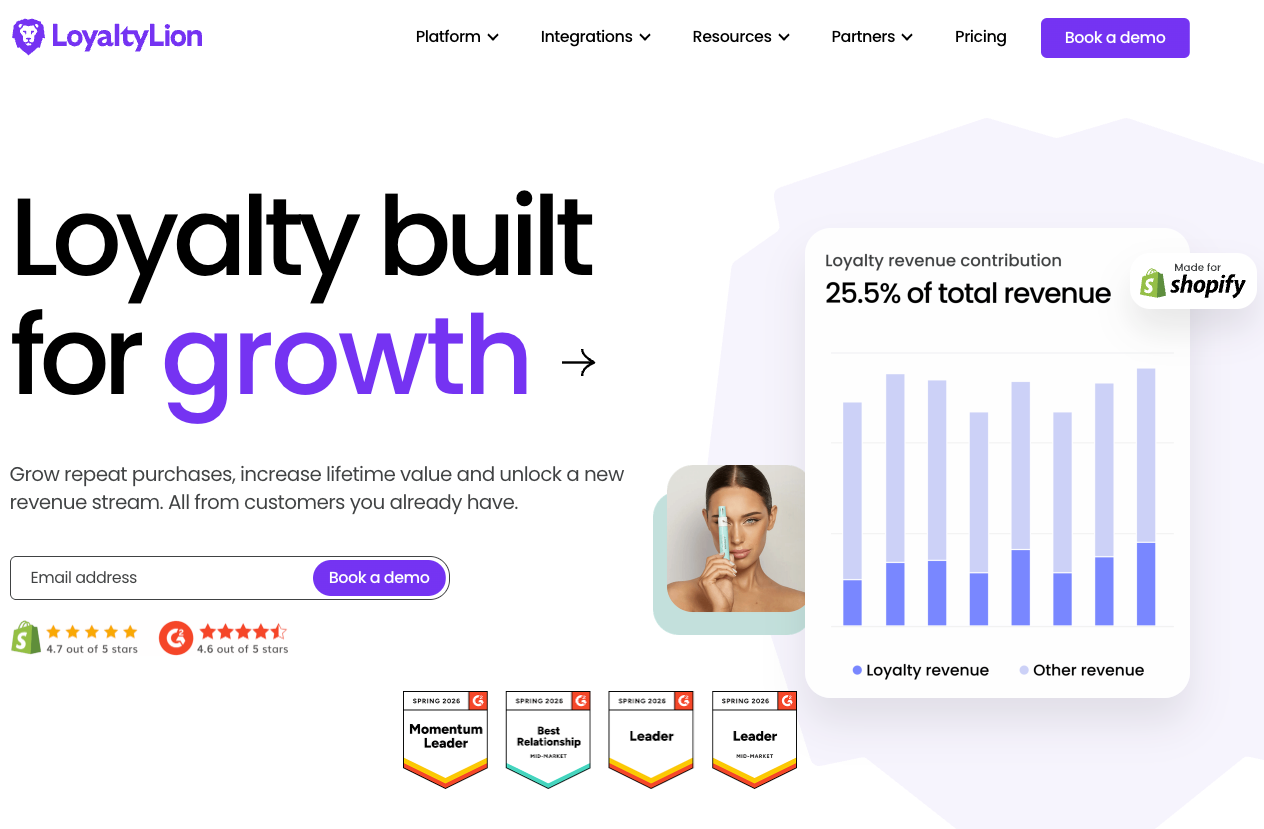
What it does well: LoyaltyLion is a dedicated loyalty platform with strong native support for Shopify and Shopify Plus. It offers over 100 loyalty features, including points, referrals, and tiered rewards, with integrations across major ecommerce platforms. G2 reviewers rate it 4.6/5 and note it is easier to set up and administer than many alternatives in its category.
Best for: Mid-market and enterprise Shopify brands that want a purpose-built loyalty solution with a wide feature set and straightforward onboarding.
Where Uniqodo differs: Uniqodo's loyalty platform is designed as part of a broader promotion experience, sitting above your existing ecommerce stack rather than being tied to a specific platform. For brands that need loyalty to connect with personalised promotions, partner journeys, and code distribution in a single layer, Uniqodo offers that consolidation so you're not locked into rebuilding if you migrate commerce platforms.
4. Smile.io: Best for SMB Loyalty and Rewards
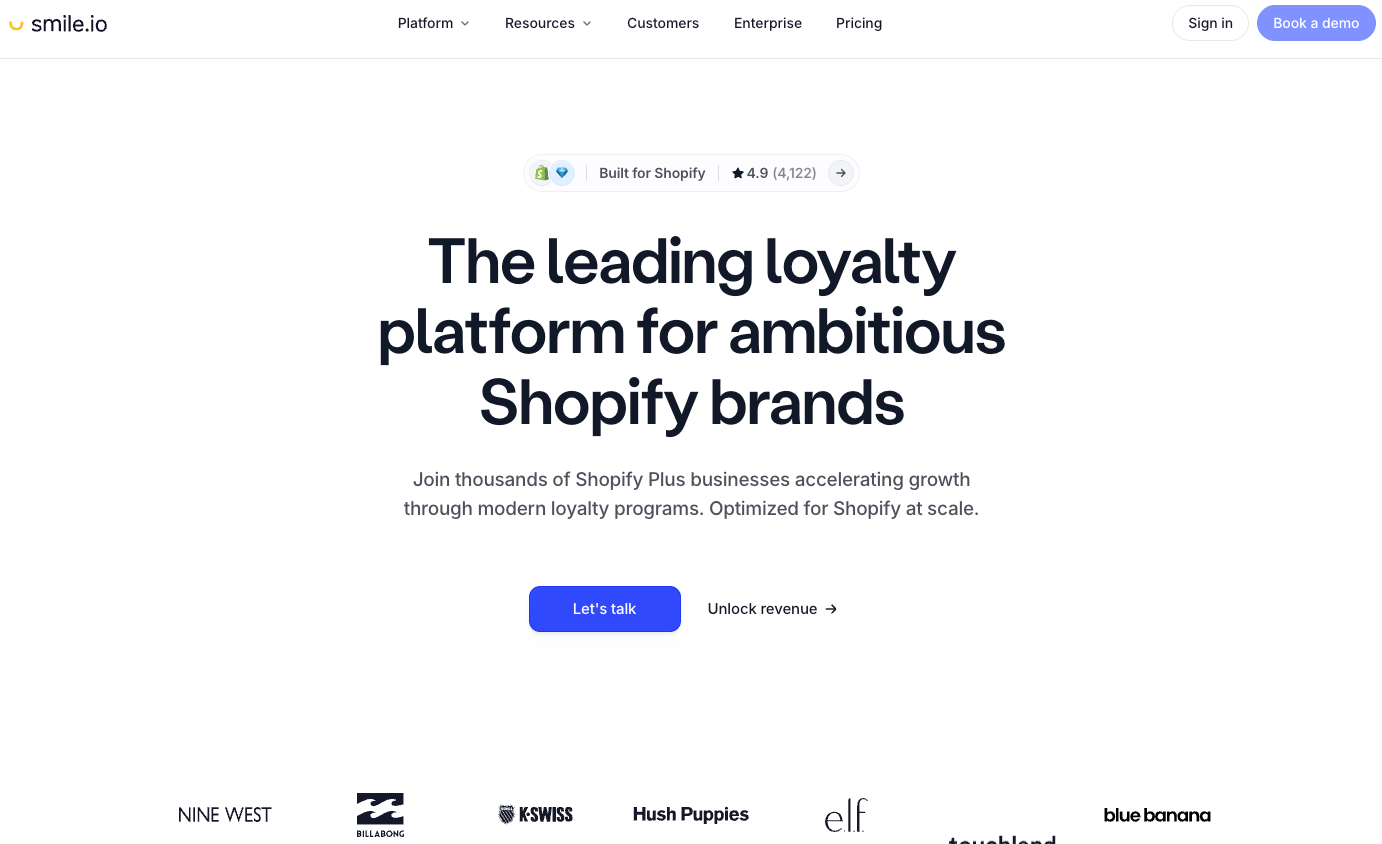
What it does well: Smile.io is one of the most widely used loyalty apps for smaller ecommerce brands. It covers points programmes, referral campaigns, and VIP tiers with a free entry-level plan and a straightforward setup process. G2 reviewers rate it 4.6/5 and highlight ease of administration as a key strength.
Best for: Small to mid-sized ecommerce businesses that want a quick-to-launch loyalty programme without significant technical investment.
Where Uniqodo differs: Uniqodo is built for enterprise commercial teams managing promotions at scale across multiple channels and partner networks. For brands that have outgrown a standalone loyalty app and need personalised promotions at scale alongside loyalty, referrals, and code security in one place, Uniqodo gives you the campaign complexity and margin controls that enterprise promotion volumes require.
5. Antavo AI Loyalty Cloud: Best for Out-of-the-Box Loyalty Workflows
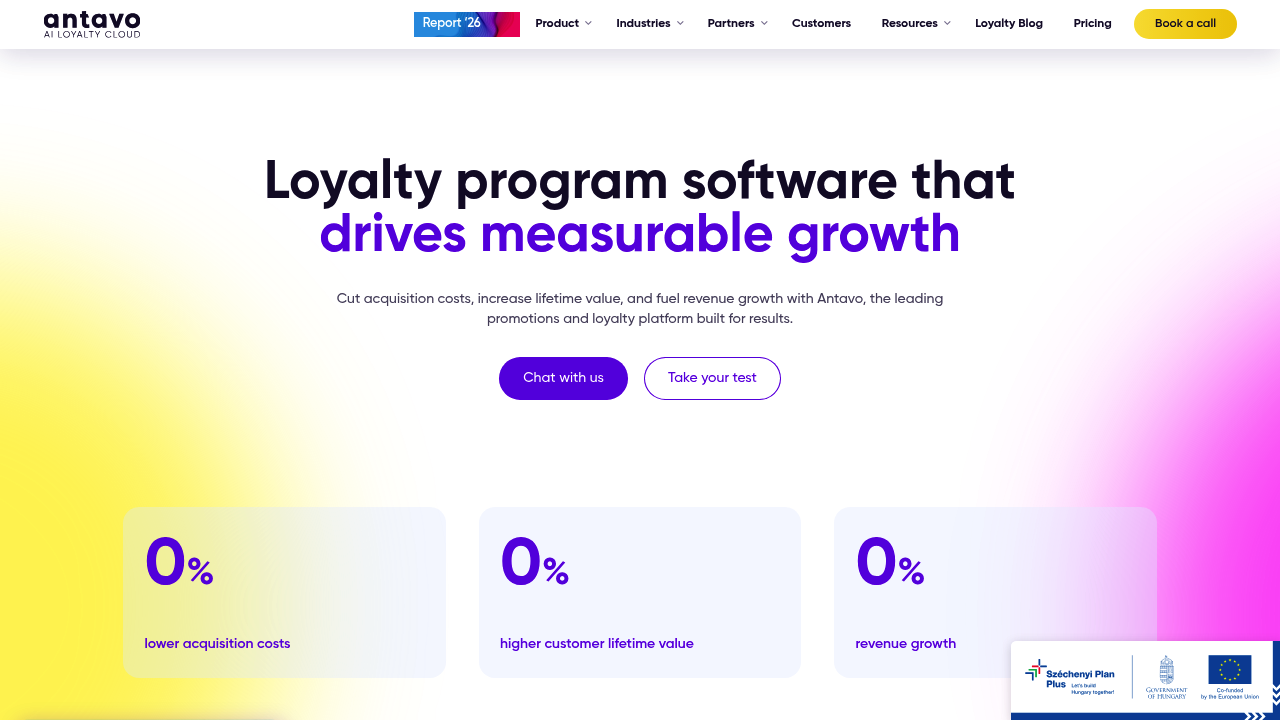
What it does well: Antavo is a loyalty technology platform with a strong focus on pre-built mechanics and workflows that help brands launch structured loyalty programmes faster. Gartner Peer Insights reviewers highlight its out-of-the-box capabilities, integration with existing platforms, and customer support as standout strengths. It suits brands starting a loyalty programme and wanting a guided, structured approach.
Best for: Brands launching a new loyalty programme that want pre-configured mechanics, omnichannel support, and a managed implementation process.
Where Uniqodo differs: Uniqodo takes a modular approach. Brands can start with one product, such as the Promotion Engine for code security or Code Distribution for partner attribution, and expand as their needs grow. Rather than committing to a loyalty-first platform and building other capabilities around it, brands can start with the specific problem they need solved today, whether that's code security, partner attribution, or onsite conversion, and add loyalty as the business case develops.
6. Xoxoday: Best for Multi-Stakeholder Rewards
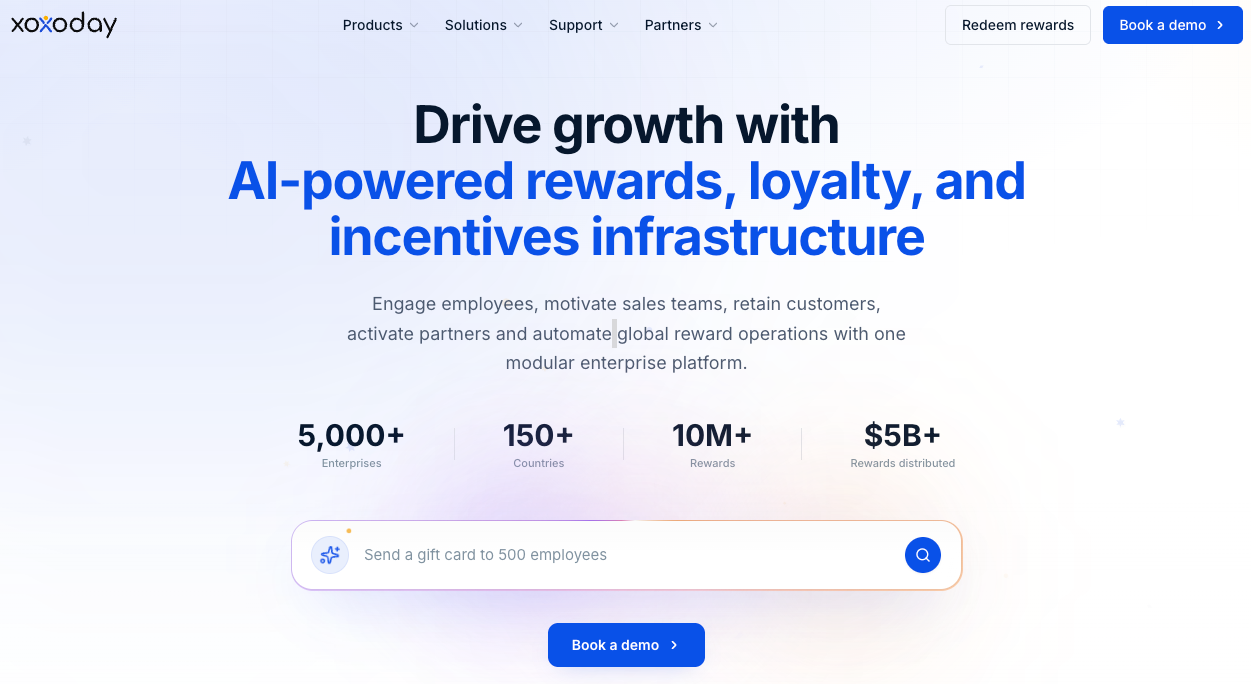
What it does well: Xoxoday is an AI-powered rewards and engagement platform built for organisations that need to incentivise multiple audiences at once, including customers, employees, partners, and sales teams. It offers over 10,000 brand reward options across 100+ countries, making it a strong choice for global enterprise programmes. G2 reviewers rate it 4.6/5 and note ease of setup and administration.
Best for: Enterprise organisations running rewards programmes across customers, employees, and channel partners who need a broad global catalogue and centralised management.
Where Uniqodo differs: Uniqodo focuses specifically on the commercial promotion layer for ecommerce and retail brands. Rather than a broad rewards catalogue, Uniqodo is built around preventing promotion abuse, driving incremental revenue through targeted incentives, and connecting promotions to partner distribution channels. It is the right choice when promotion performance and margin protection are the primary goals.
Why Do Businesses Look for Voucherify Alternatives?
Voucherify is a highly capable, API-first promotion engine, but its architecture introduces specific challenges depending on a company's operational model. Generally, enterprise commercial and marketing teams look for alternatives due to four primary friction points:
1. Heavy Developer Dependency for UI and Advanced Logic
Voucherify is built as a developer-first, headless API engine. While marketing teams can manage basic offer parameters from a dashboard after the initial setup, creating the actual front-end customer experience (like personalized banners, custom landing pages, or checkout blocks) requires continuous engineering support.
Furthermore, whenever a commercial team wants to launch a highly complex campaign that relies on new custom data points or event-triggered actions, they face operational bottlenecks while waiting for developers to map the backend APIs and fit the changes into a standard engineering sprint.
2. Limited Native Partner Distribution & Attribution
While Voucherify handles internal code logic well, it lacks out-of-the-box infrastructure for external distribution networks. Brands looking to run secure campaigns across affiliate channels, closed-user groups, and major network aggregates often find they have to build custom integrations to manage partner attribution effectively.
3. The Gap Between Code Generation and Onsite Conversion
Voucherify excels at backend logic, but it doesn't inherently manage the front-end user experience. Brands looking for an all-in-one solution that seamlessly connects code validation to personalised onsite experiences (like basket abandonment triggers) often find they need a more conversion-focused layer.
4. Unpredictable Scaling Costs Unlinked to ROI:
Voucherify's enterprise pricing scales on API call volume. For high-traffic retail or travel brands, seasonal campaigns can drive significant cost increases regardless of whether that traffic converts. A pricing model tied to conversions rather than API activity gives commercial teams more predictable costs and a clearer link to ROI.
The options available to buyers have never been stronger. Here are the 6 best alternatives.
How We Chose These Voucherify Alternatives
The platforms in this list were selected based on four criteria:
- Breadth of promotion and loyalty capabilities
- Suitability for different team sizes and technical setups
- Evidence from verified user reviews on G2, Capterra, and Gartner Peer Insights
- How well each platform addresses the core reasons teams look beyond Voucherify.
Those reasons typically include the need for stronger onsite conversion tools, simpler marketer-facing interfaces, tighter partner attribution, or a platform that consolidates multiple promotional functions. Each entry reflects a genuinely different fit, not a like-for-like replacement.
Finding the Right Voucherify Alternative for Your Team
The right Voucherify alternative depends on where the friction sits. If the bottleneck is developer dependency and you need commercial teams launching promotions independently, a platform built for marketer self-serve will outperform one that routes every campaign change through engineering. If the gap is partner distribution and code security across affiliate channels, that narrows the field further. If your primary need is a standalone loyalty programme or a rewards catalogue, the dedicated tools in this guide will be the better fit.
Every platform listed here serves a genuine use case. The comparison table and breakdowns above should give you enough to shortlist two or three options worth evaluating against your stack, your team structure, and your promotion volumes.
If Uniqodo looks like the right fit, book a demo to see the Promotion Engine, code distribution network, and onsite experiences in action. If it's not the right fit, this guide should have pointed you toward what is.
Voucherify Alternatives: FAQs
What is the best Voucherify alternative for enterprise teams?
Talon.One and Uniqodo are the strongest enterprise-grade Voucherify alternatives. Talon.One, owned by Adyen since July 2026, suits developer-led teams that want a single rule engine for complex logic, while Uniqodo suits commercial and marketing teams that need personalised promotions, partner code distribution and onsite experiences from one platform.
What is Voucherify pricing?
As of September 2026, Voucherify's published plans start at €600 per month for Business (25,000 API calls) and €1,200 per month for Organisation (50,000 API calls), with Enterprise priced on custom limits. Because every tier is set by API call allowance, high-traffic campaigns can push costs up regardless of how many visits convert.
How does Uniqodo compare to Voucherify as a coupon platform?
Voucherify is an API-first promotion engine best suited to developer-led teams building custom promotional logic. Uniqodo operates as a promotion experience platform that sits above your existing stack, giving marketing teams direct control over code generation, partner distribution, onsite personalisation, and fraud prevention without requiring code changes for each campaign.
What should I look for when choosing a Voucherify competitor?
The most important factors are: whether the platform supports your promotion types (coupons, bundles, loyalty, referrals), how much engineering resource it requires to operate, how it handles code fraud and abuse prevention, whether it integrates with your partner and affiliate channels, and the total cost of ownership at your campaign volume.

Julius Somoye
Founder & CTO