

The best cart abandonment software for enterprise ecommerce depends on when you want to act. Uniqodo, RevLifter and Sleeknote work onsite before the shopper leaves, Klaviyo follows up by email and SMS, and SaleCycle, Salesfire and intent.ly do both. Onsite tools reach any visitor, while email only reaches shoppers you can identify.
What is cart abandonment software?
Cart abandonment software tries to win back shoppers who add items to their basket and leave without buying. A shopper who leaves a full basket is a sale you’ve already paid to attract, and the tools split by timing. Some act on the site while the shopper is still deciding. Others send an email or text once they’ve gone, which only works if you know who they are.
The comparison lists that rank for this term mostly cover email tools for Shopify and WooCommerce stores. This one covers both kinds of tool, for retail, travel and telco teams where a recovery discount that ends up on a voucher site costs real margin. If you’re still deciding which tactics to run, start with these onsite tactics to reduce cart abandonment.
How did we choose the best cart abandonment software?
Good cart abandonment software reaches the right shoppers at the right moment, with an offer that can’t be passed around.
- When it acts. Before the shopper leaves, after they’ve gone, or both.
- Who it can reach. Any visitor on the site, or only shoppers who have given an email address or phone number.
- Offer control. Whether recovery offers can use unique, single-use codes with an expiry, or rely on one shared code.
- Targeting. Triggers such as exit intent and inactivity, and rules on basket value, products and traffic source.
- Fit with your stack. How it installs on enterprise ecommerce platforms and whether it works with the email tool you already run.
- Measurement. Whether you can compare results against a control group that saw nothing.
Every vendor detail below comes from the vendor’s own website, app listing or help centre, or a named partner listing.
Which cart abandonment software is best for enterprise ecommerce?
Uniqodo: best for enterprise brands that want onsite recovery offers backed by unique codes
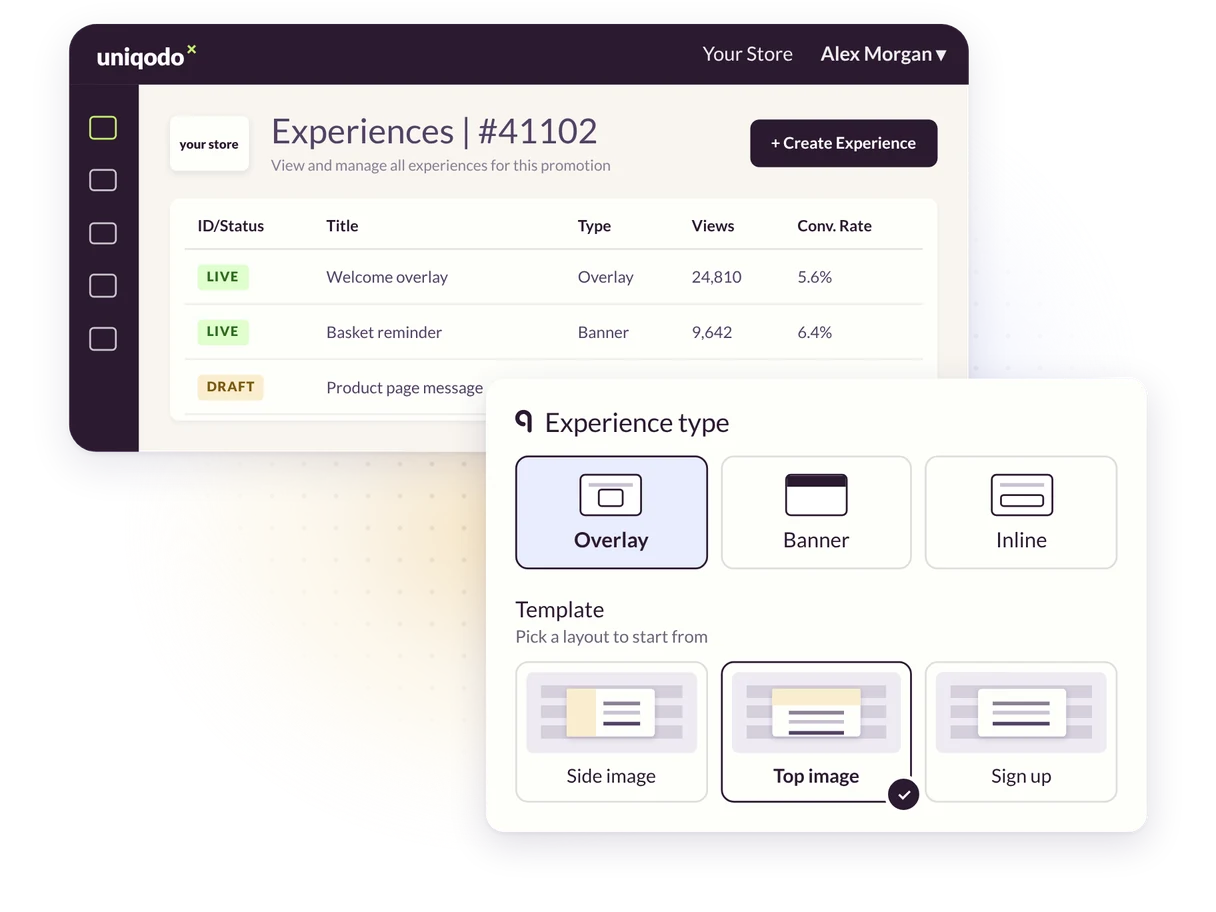
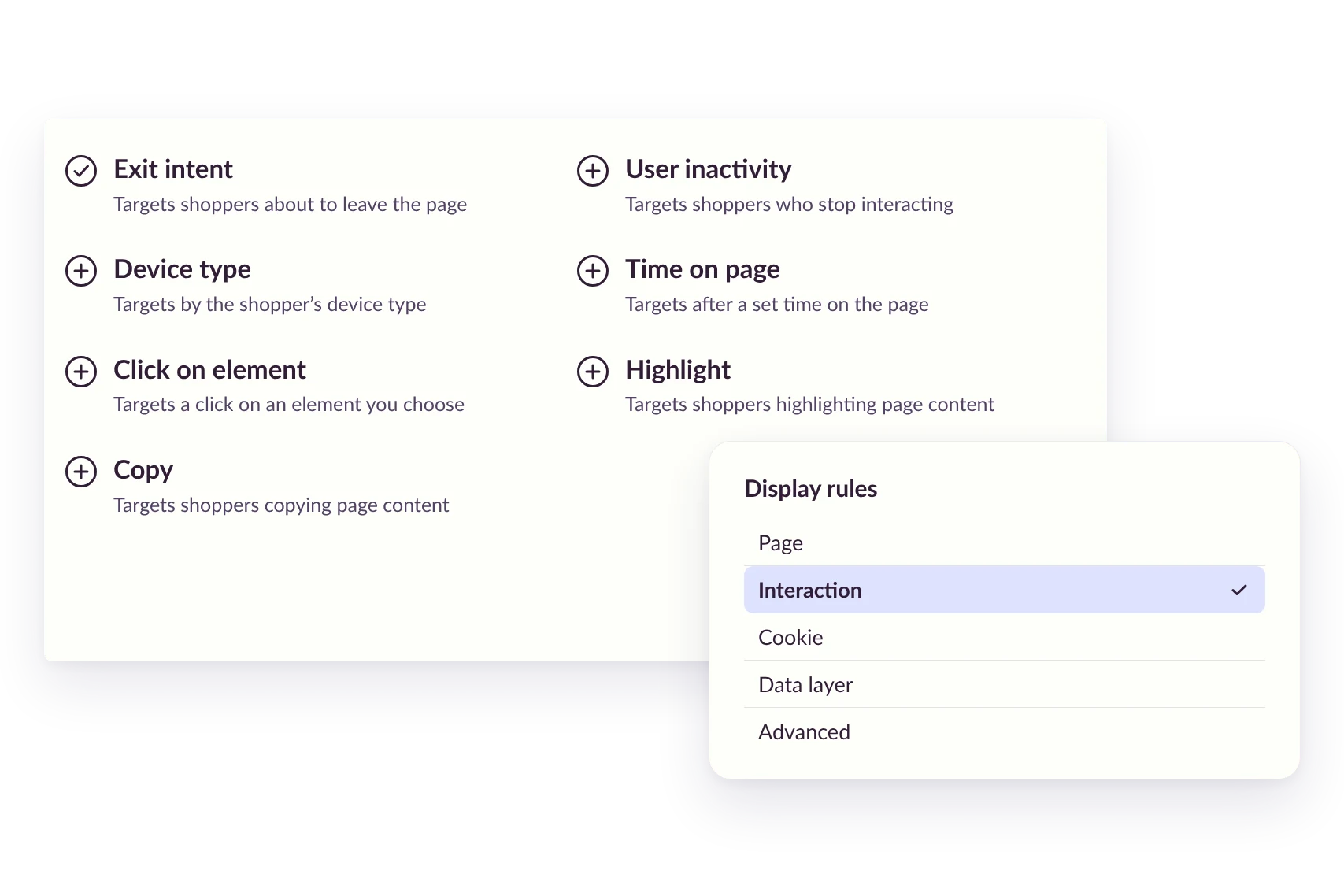
What it does well: Uniqodo’s Onsite Experiences show overlays, banners and inline messages to shoppers while they’re still on the site. Each one can fire on exit intent, user inactivity, time on page, a click on a chosen element, or a shopper highlighting or copying text, and data layer values such as order subtotal let you target by basket value. The offer inside can be a unique code from Uniqodo’s Promotion Engine with an expiry set in minutes, hours or days, so it works once and can’t spread to voucher sites. Uniqodo’s exit-intent offers with short-life codes use a 30-minute window as an example.
Code reminder banners follow returning visitors who haven’t used their reward, and countdown clocks show how long an offer has left. Each experience can hold back a control group, and its reporting shows views, conversions, conversion rate and average order value. Once the Uniqodo tag and integration are in place, marketers build, preview and publish experiences themselves.
Best for: Enterprise retail, travel and telco brands that want recovery offers to use the same codes and rules as the rest of their promotions.
Trade-offs:
- It doesn’t send recovery emails or texts itself. Its email code feature adds unique codes to the templates in your existing email platform.
- Experiences are built from templates rather than a drag-and-drop editor.
SaleCycle: best for brands that want one specialist for onsite messages and remarketing
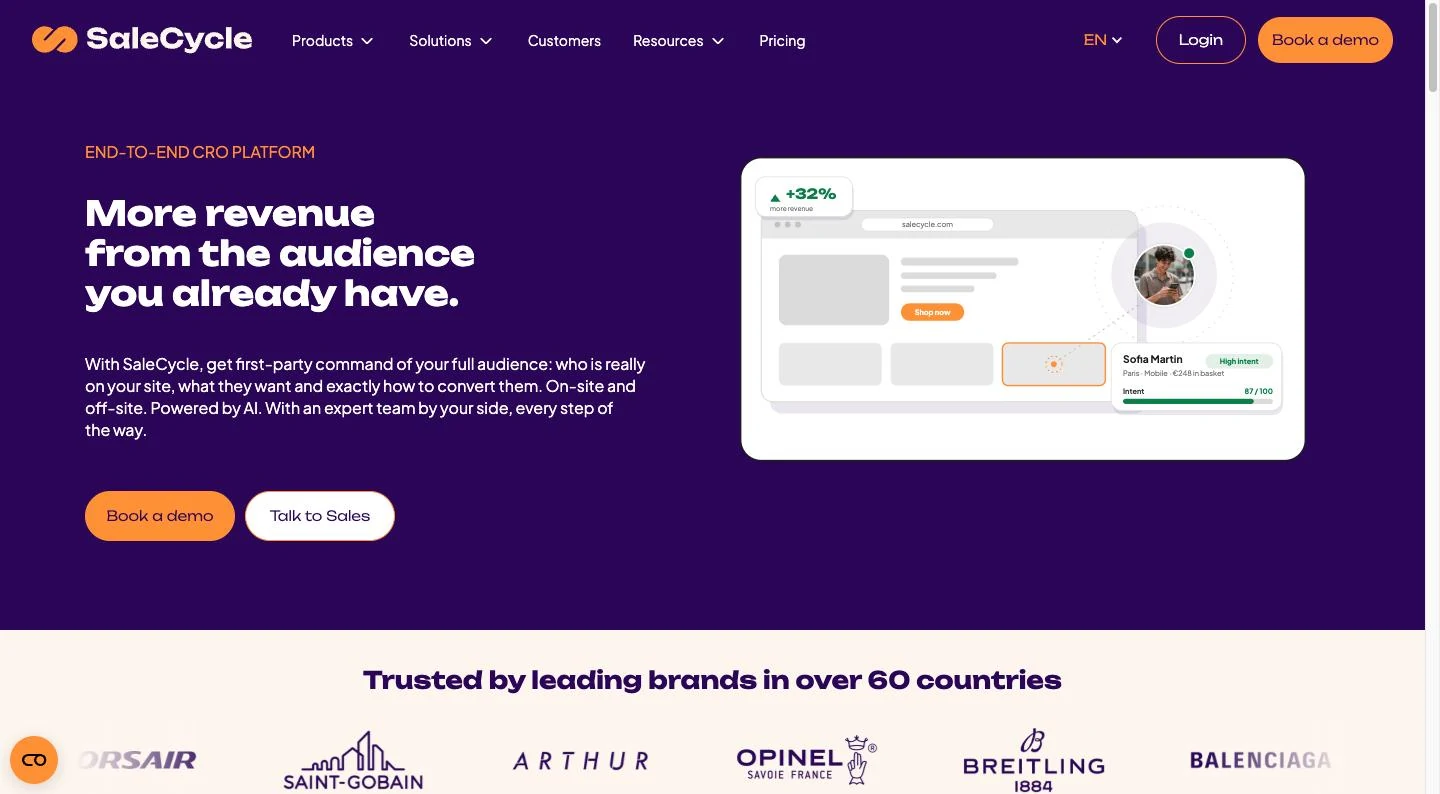
What it does well: SaleCycle works on both sides of the exit. Its Onsite Engagement module shows pop-ins, banners, overlays and exit-intent messages, triggered by behaviour such as a basket that’s about to be abandoned. After the shopper leaves, it follows up by email, SMS, WhatsApp and RCS, and it identifies visitors so messages can reach people who never logged in. It calls itself GDPR-native and pairs the software with an expert team.
Best for: Brands that want one vendor and a managed team for both onsite messages and multichannel remarketing.
Trade-offs:
- Its pages don’t say whether recovery offers can carry unique, single-use codes, so ask how it stops a recovery discount being shared.
Klaviyo: best for brands that recover carts mainly by email and SMS
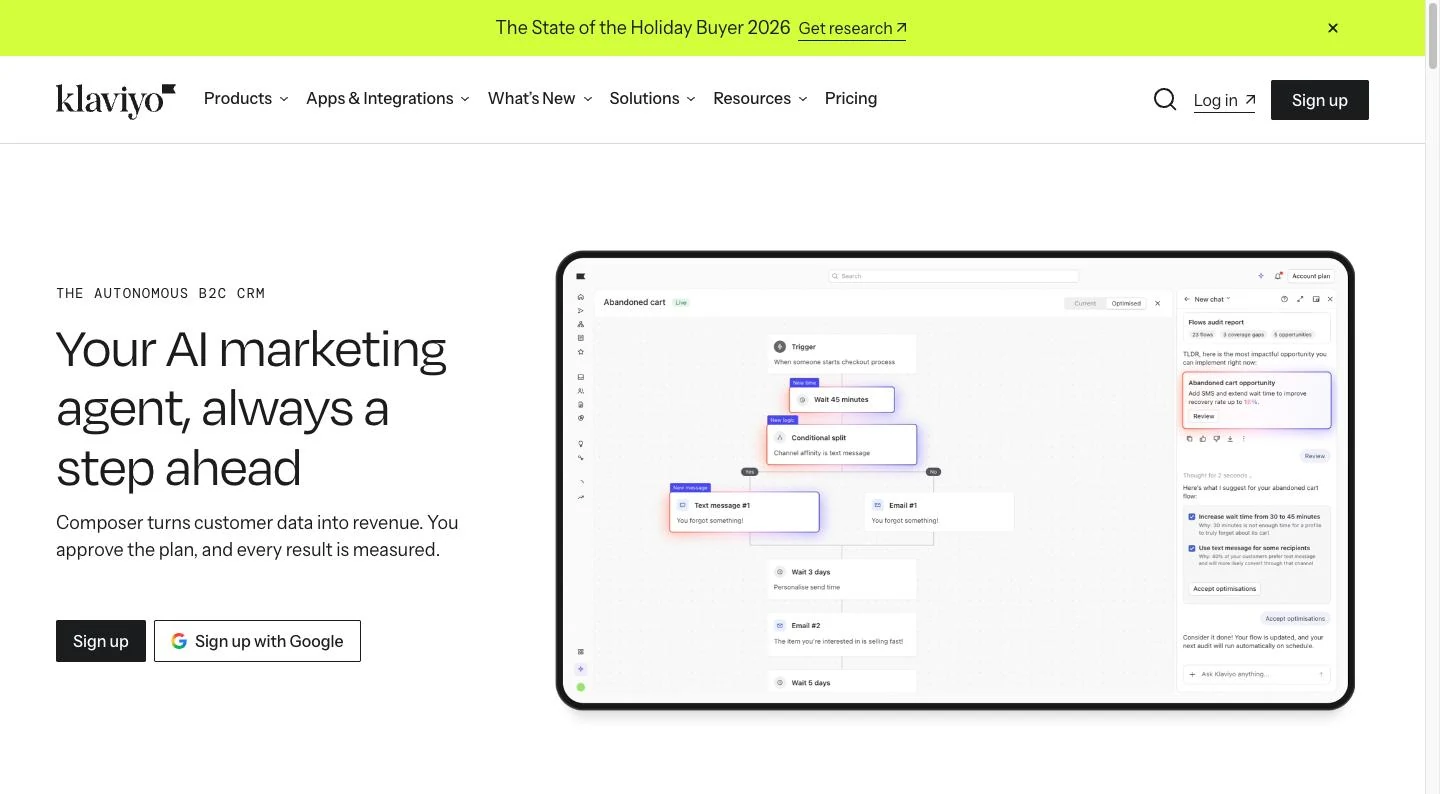
What it does well: Klaviyo is a B2C CRM, so its abandoned cart flows run alongside the rest of your email and SMS. Its help centre recommends two flows: one triggered when a shopper adds an item to the cart and one when they start checkout, so you reach people at each stage. Flows can be email only or email and SMS, and they can branch on details such as the value of the cart.
Best for: Brands whose recovery runs on email and SMS, and who want those flows in the same tool as their other customer messages.
Trade-offs:
- Flows only reach shoppers Klaviyo can identify. Its help centre says the Added to Cart flow relies on events from identified shoppers, and most pre-built flows start when someone enters their details at checkout.
RevLifter: best for retailers that want offers shown only to shoppers likely to leave
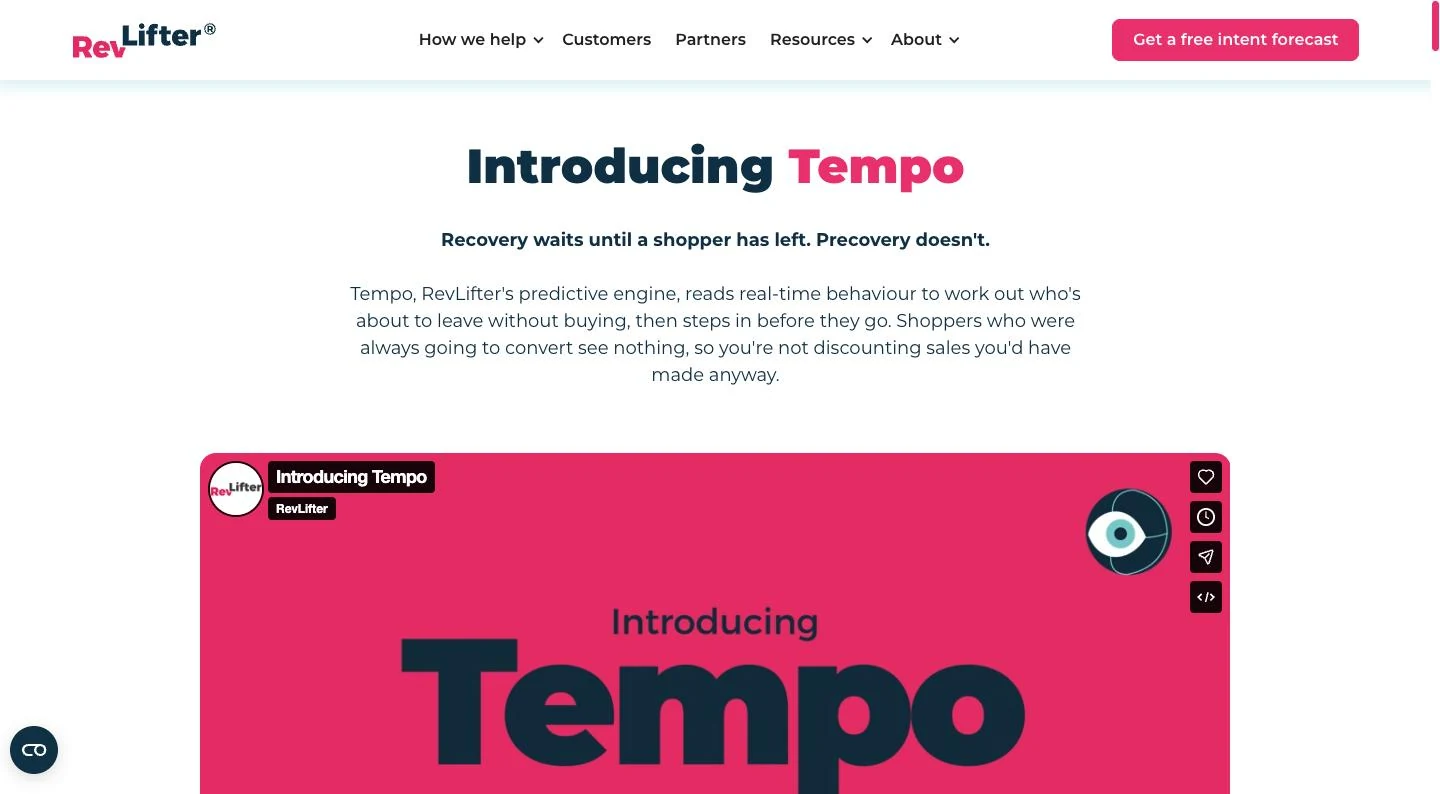
What it does well: RevLifter’s Tempo engine reads how each shopper is browsing in real time, predicts who is about to leave without buying and shows an offer only to them. RevLifter says shoppers who were going to buy anyway see nothing, so you stop discounting sales you’d have made. Tempo reads intent for shoppers who haven’t given an email address, offers can be targeted by behaviour, intent and basket value, and it installs through a store plugin, app or a lightweight tag.
Best for: Retailers that want fewer, better-targeted discounts, with RevLifter’s team running and testing the campaigns.
Trade-offs:
- It’s sold as a fully managed service, from $699 a month on its Shopify app listing. Teams that want to build every offer themselves should ask how much they control.
Salesfire: best for retailers on Klaviyo that want more abandoned carts to trigger a flow

What it does well: Salesfire builds a profile of each shopper from their first click and uses it for onsite search, product recommendations and messaging. Its overlays can show on exit intent to prevent basket abandonment, or run a title highlight campaign aimed at shoppers comparing prices elsewhere. Its AI Connect integration identifies shoppers Klaviyo can’t see and sends their abandonment events into Klaviyo flows, and Salesfire also offers its own email sequences and SMS.
Best for: Retailers already using Klaviyo who want more abandoned carts to reach an email flow, plus onsite search and recommendations.
Trade-offs:
- AI Connect is built for Klaviyo, so teams on another email platform get less from that part of the product.
intent.ly: best for retailers that want onsite campaigns on a performance-based model
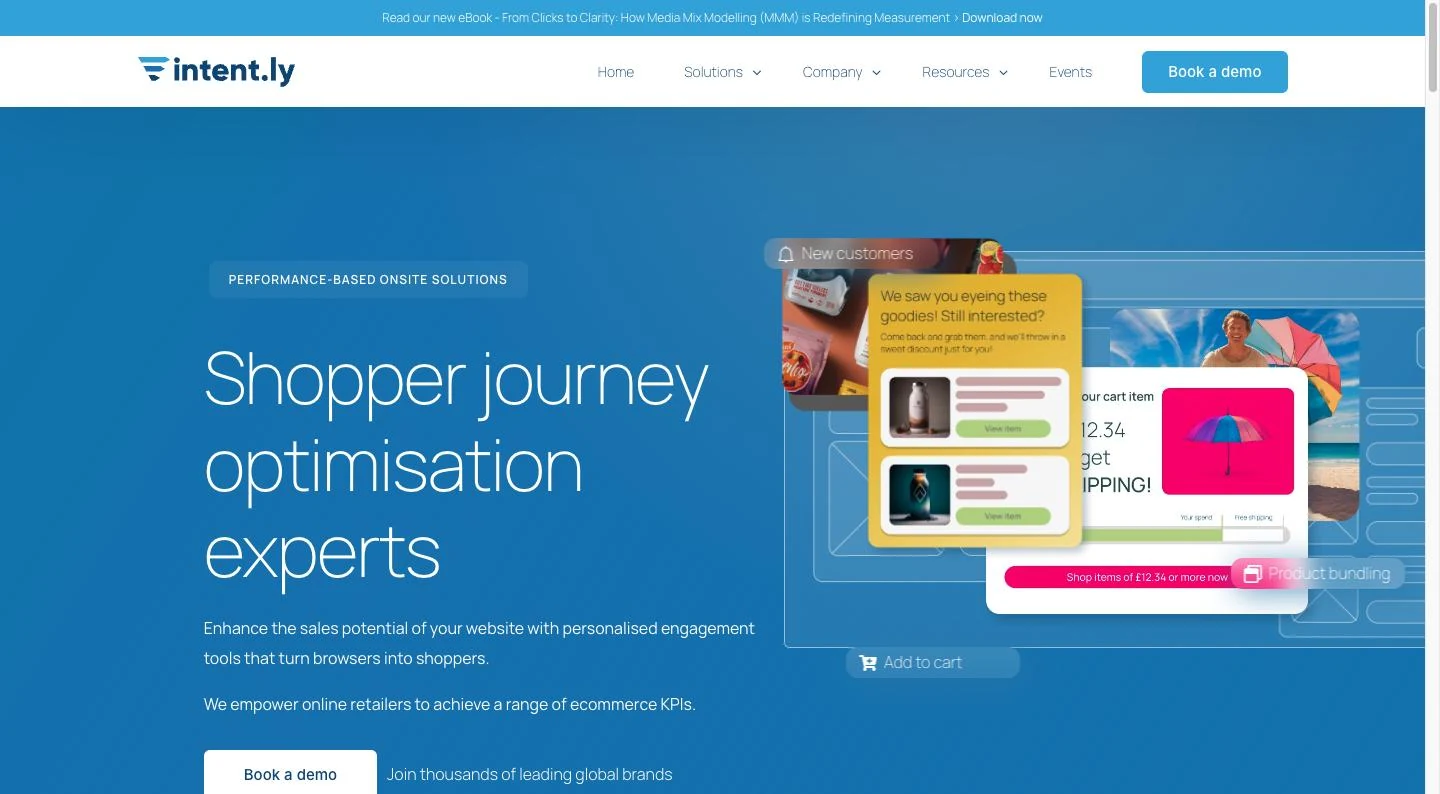
What it does well: intent.ly runs targeted overlays and in-page campaigns, and its email remarketing reminds shoppers of what they left in their basket. It describes its onsite work as performance-based, and its Partnerize partner listing says campaigns typically target 2 to 10% of non-converting traffic. Retailers on Awin can switch it on through the Awin MasterTag.
Best for: Retailers that want onsite campaigns and basket reminder emails on a performance-based model.
Trade-offs:
- Its pages don’t describe a self-serve campaign builder, so ask how much your own marketers can change and how quickly.
Sleeknote: best for ecommerce teams that want to build popups themselves
What it does well: Sleeknote builds popups, sign-up forms and gamified campaigns such as wheels, scratch cards and quizzes. Its exit-intent trigger switches on with one click, can be limited to cart or checkout pages and to shoppers who haven’t bought, and incentives can change with the visitor’s location or cart value. It has more than 130 exit-intent templates, connects to your email and SMS tools, and offers a 14-day free trial.
Best for: Ecommerce teams that want to build and test exit-intent popups themselves, without a long set-up.
Trade-offs:
- It captures the shopper and shows the offer on the site, but follow-up messages run in your email and SMS tools.
Other cart abandonment tools worth knowing
Mastercard’s Dynamic Yield triggers emails, push notifications, exit-intent overlays and retargeting ads when a cart is abandoned, as part of a wider personalisation suite. OptinMonster’s exit-intent popups also detect mobile users scrolling up.
Shopify and BigCommerce can send basic abandoned cart emails themselves, and Klaviyo’s help centre advises turning those off once you run your own flows. Newer AI tools call or text shoppers after they leave and hold a two-way conversation with them.
Do you need onsite or email cart abandonment tools?
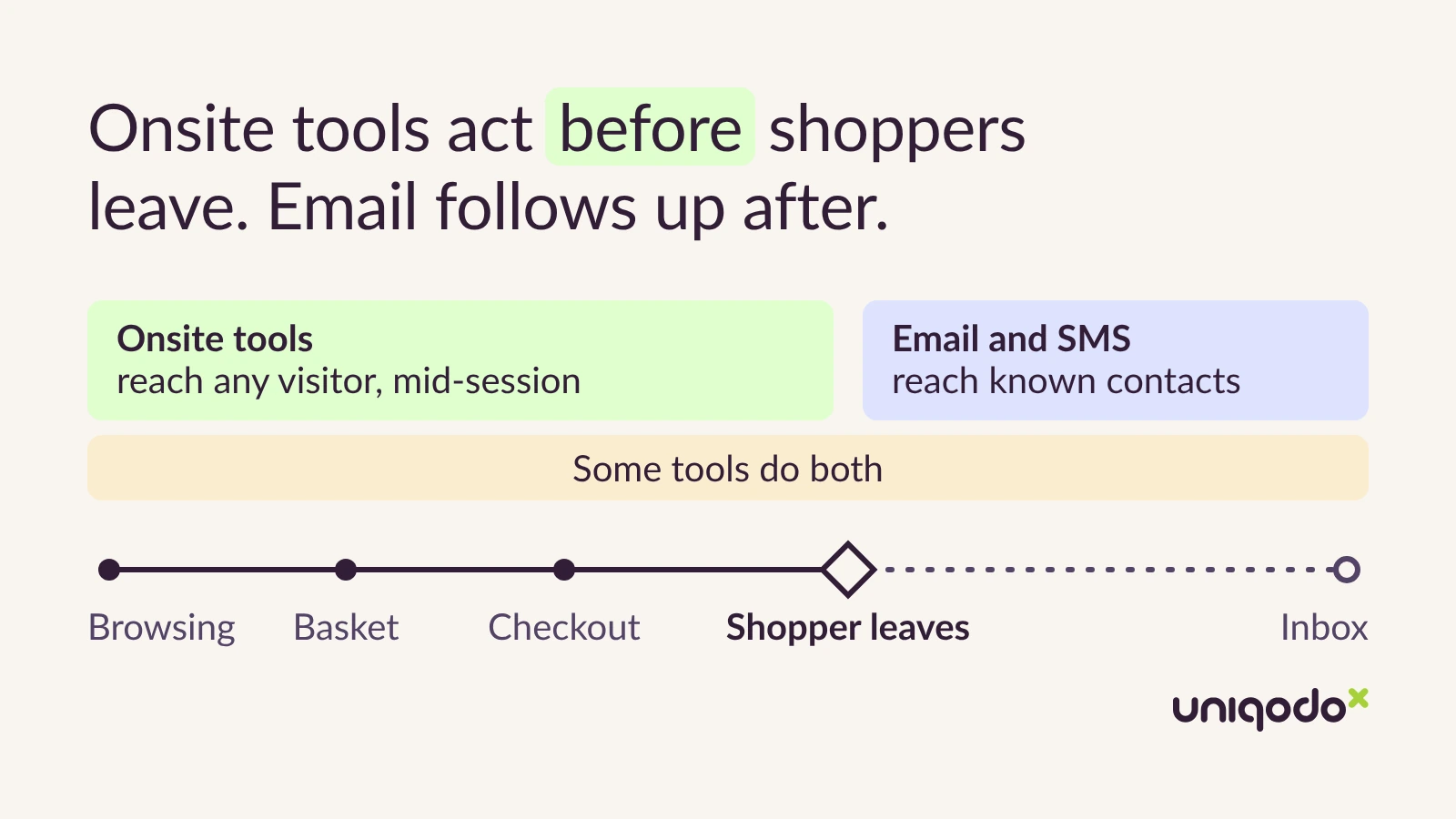
Onsite tools act while the shopper is still on the site, and email and SMS tools act after they’ve gone. That difference decides who you can reach. An onsite message can show to any visitor, including those who never type an email address. An email or text can only go to someone you can identify, and for most of Klaviyo’s pre-built flows that means a shopper who entered their details at checkout.
The channels also perform differently. In Uniqodo’s H1 2026 coupon code statistics, across 90 merchants and 4,124 promotions, retail codes delivered onsite were redeemed at 18.60% of validations, against 7.67% for codes sent by email. In travel, onsite promotions averaged £5,831 per redemption, against £856 for codes distributed through an API. These figures cover every promotion type with a recorded channel, not only cart recovery.
Running both covers the gap: an onsite offer for shoppers about to leave, then an email for the ones who still go. Give each channel its own unique codes so you can see which one recovered the sale, and set a limit of one code per customer so a shopper can’t claim both offers. Uniqodo’s basket abandonment page shows how to recover baskets before shoppers leave.
Email and SMS recovery also needs the right permission. In the UK, PECR requires consent or the soft opt-in for marketing emails and texts (ICO, 2026).
What should you check before buying cart abandonment software?
Choosing cart abandonment software starts with where your shoppers drop off, then which tool can reach them there.
- Find where shoppers leave. Your analytics will show whether it’s the basket page, delivery options, payment or a particular product range.
- Decide on onsite, email or both. If most of your abandoners never give an email address, an email-only tool can’t reach them.
- Check offer control. Ask whether recovery offers use unique, single-use codes with an expiry and a per-customer limit, and whether they stack with your other promotions.
- Set expiry windows from real redemption data. In the same H1 2026 data, 44.1% of non-batch redemptions happened within an hour of the code being issued, and retail codes had a median of 15 hours from issue to redemption. A short window suits an exit offer, while an email follow-up needs longer.
- Check how it fits your stack. Ask how it installs on your platform (tag, plugin or API) and whether it can put codes into the email templates you already send.
- Hold back a control group. Compare shoppers who saw the offer with shoppers who didn’t before you scale it up.
Choosing the right cart abandonment software
Every tool on this list either shows shoppers a message before they leave or follows up once they’ve gone. What separates them is when they act, who they can reach and how much control you keep over the offer.
If your recovery runs on email and SMS and you want it inside your CRM, Klaviyo fits, and Salesfire adds reach for Klaviyo users by identifying shoppers Klaviyo can’t see. If you want one specialist running onsite messages and remarketing for you, look at SaleCycle. If you want offers shown only to shoppers likely to leave, with a team running the campaigns, RevLifter is built for that, while intent.ly offers onsite campaigns and basket reminder emails on a performance-based model. If you want to build popups yourself and start quickly, Sleeknote has a free trial.
If you need recovery offers that use unique, time-limited codes, follow the same rules as the rest of your promotions and can be measured against a control group, Uniqodo is built for that. It suits enterprise retail, travel and telco teams that want cart recovery to sit inside the platform that already runs their promotions.
To see how onsite recovery offers would work on your site, book a demo.
FAQs about cart abandonment software
Are abandoned cart emails legal in the UK?
Yes, with the right permission. Under PECR, marketing emails and texts need consent or the soft opt-in. The soft opt-in needs you to have collected the details yourself while selling or negotiating a sale, to market only similar products and to offer an opt-out at collection and in every message (ICO, 2026). Browsing alone doesn’t count.
How do you stop cart recovery discount codes leaking?
Use unique, single-use codes instead of one shared code, give each a short expiry and limit how many codes one customer can get. A leaked unique code works once at most, while a shared code can spread across voucher sites and browser extensions and keep redeeming until you switch it off.
Does cart abandonment software work with Salesforce Commerce Cloud or commercetools?
Usually, but check how. Onsite tools tend to install with a JavaScript tag, which any platform that allows one can run. Email tools need your platform to send cart and checkout events, which can mean a connector or developer work. Uniqodo lists Salesforce Commerce Cloud and commercetools among the platforms it works with.
Is Uniqodo a good fit for cart abandonment?
Uniqodo fits enterprise retail, travel and telco brands that want onsite recovery offers using the same unique codes and rules as the rest of their promotions. It shows offers on the site rather than sending emails, so teams pair it with their email platform and add Uniqodo’s unique codes to their recovery emails.

Kate Forknell
Head of Product