
Promotional marketing is the practice of using incentives, such as discount codes, product bundles, free gifts, and loyalty rewards, to drive a specific customer action like a first purchase, a larger basket, or a repeat visit. Unlike brand advertising, which builds awareness over time, promotional marketing triggers measurable behaviour and ties directly to revenue.
Promotional marketing is a commercial discipline focused on offering customers a tangible incentive to act now rather than later. That incentive takes many forms: a percentage off, a free product, bonus loyalty points, an exclusive bundle, or early access to a sale. Every promotion exists to change behaviour, whether that means converting a hesitant first-time visitor, increasing average order value, or winning back a lapsed customer.
For e-commerce teams, promotional marketing is rarely a single tactic. It spans owned channels (email, onsite banners, app notifications), paid channels, and partner channels such as affiliates, closed user groups, and employee benefit platforms. Managing all of that at scale, without leaking margin, is where the discipline gets hard.
Most promotion programs combine several promotional mechanics, each designed to solve a different commercial problem.
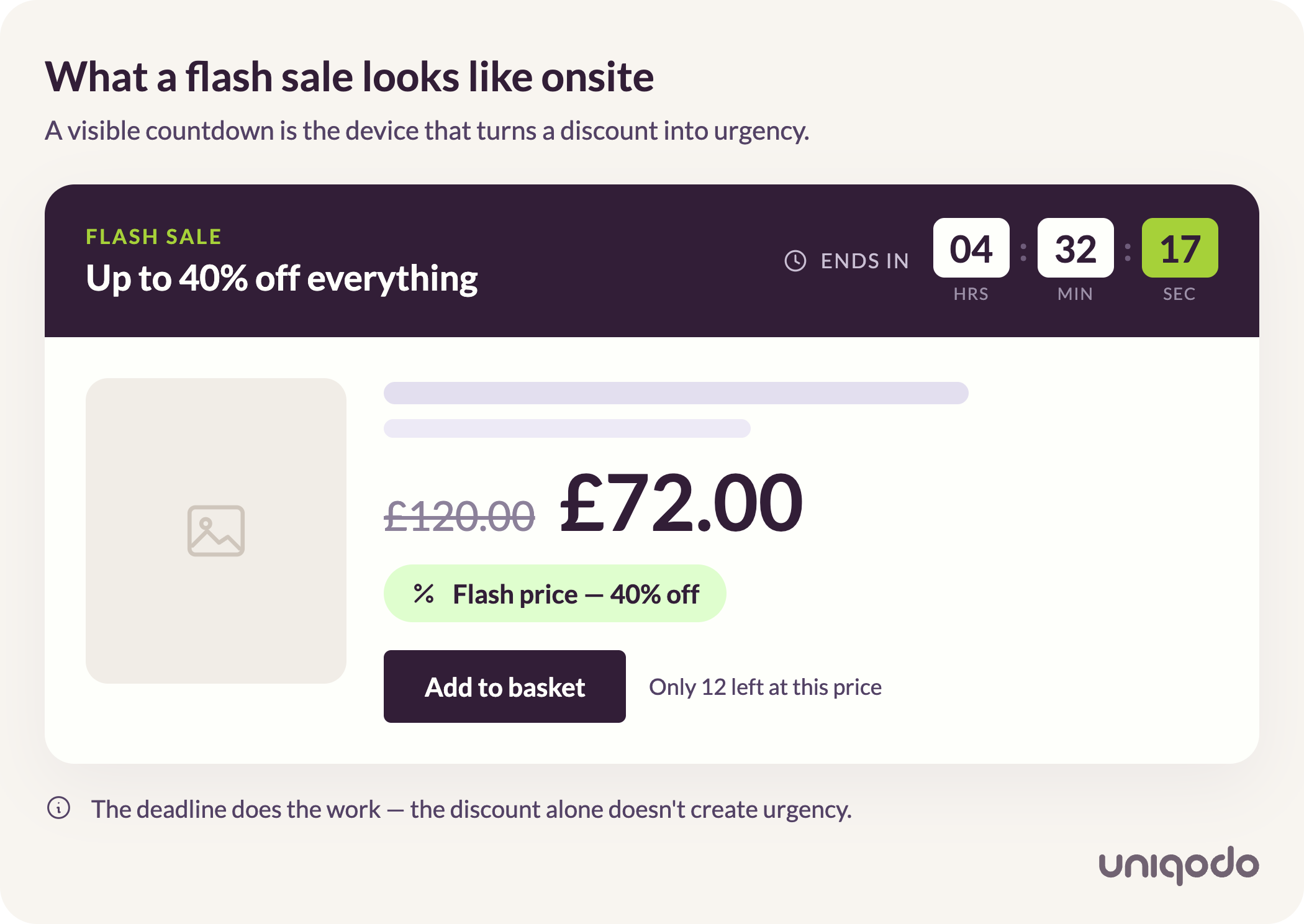
Percentage or fixed-amount discounts, tiered thresholds (spend more, save more), and flash sales are the most common promotional mechanics and the most easily abused. They work because the value is immediate and easy for the customer to understand. The risk is equally straightforward: a broad, uncontrolled discount applied to customers who would have bought at full price erodes margin without generating incremental revenue.
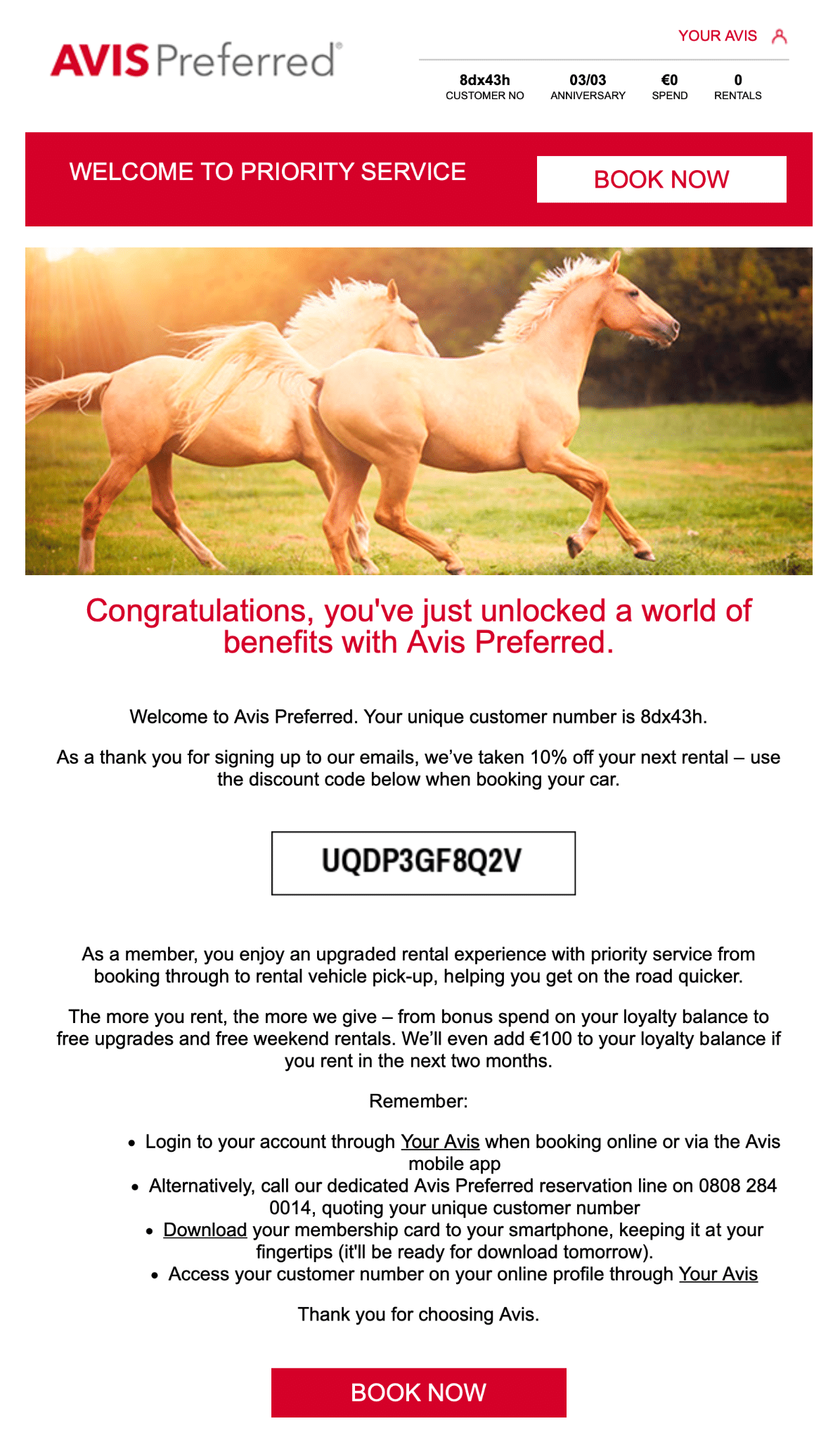
Generic or unique discount codes distributed through email, affiliates, influencers, or partners give brands a direct line between a promotion and the channel that drove it. Unique, single-use codes take that further: each code works once, for its intended recipient, which means attribution is exact rather than modelled and leakage onto public coupon sites is closed at source.
Avis Budget Group used this approach with Uniqodo to drive email subscriber growth across Europe, issuing unique codes valid only for new subscribers who signed up through targeted campaigns on the Avis and Budget websites. The campaign delivered 24% subscriber growth in Spain and 20% in Italy, with zero discount abuse. Read the full Avis case study.
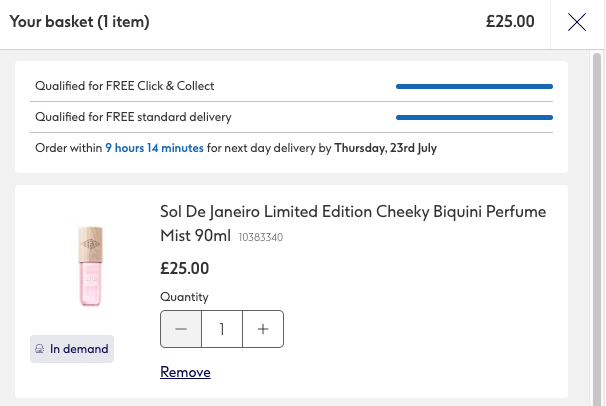
Free gifts with purchase, free delivery thresholds, and product bundles shift the perceived value of a transaction without reducing the headline price. A gift with purchase can clear slow-moving stock while making the customer feel rewarded, and a free shipping threshold lifts basket size by giving the customer a reason to add one more item rather than simply paying less for what they already wanted.
Points, member-only pricing, and refer-a-friend rewards turn a single transaction into a longer relationship. Where a discount code converts once, a loyalty or referral mechanic creates a reason to come back, and the behavioural data it generates (purchase frequency, referral reach, reward preferences) feeds future targeting.
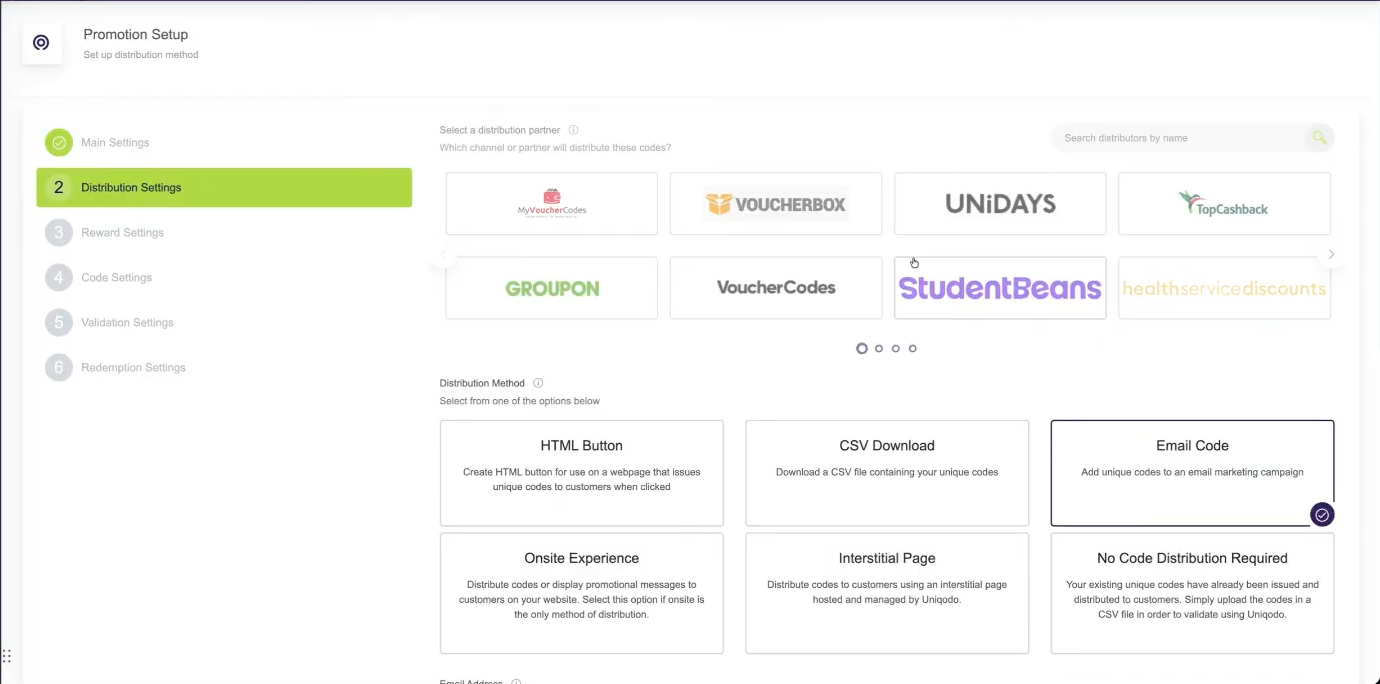
Exclusive offers distributed through affiliates, publishers, or closed user groups let brands test and scale partner channels with full visibility of what each one returns. When several partners run offers simultaneously, unique codes tied to each partner make it possible to measure which channel actually drove each sale, rather than relying on last-click attribution or modelled estimates.
Promotions are one of the few marketing levers with a direct, measurable link to revenue. A well-built offer converts undecided visitors, and the data trail it leaves behind (which code, which channel, which customer segment) makes performance easy to measure against a control group.
The stakes are also higher at enterprise scale. A poorly scoped 20% code that leaks onto a public coupon site does not just dent one campaign. It applies an unplanned discount to customers who would have paid full price, which erodes margin across the entire order base. This is why mature teams treat promotional marketing as a discipline with rules, guardrails, and infrastructure, not a box of tactical discounts.
The strongest programmes focus on incrementality: revenue that would not have happened without the promotion. That means targeting offers at specific segments, capping redemptions, restricting codes to intended channels, and measuring uplift rather than raw redemption volume. Redemption counts alone flatter a campaign. Incremental revenue tells the truth.
Ecommerce teams typically run a mix of campaign types across the customer lifecycle, each built on the mechanics above but applied to a specific commercial moment.
Welcome offers target the highest-intent point in the acquisition funnel: a visitor who has registered or added to basket but not yet converted. A first-purchase discount or free shipping offer at this stage exists to remove the last hesitation, not to build a long-term discounting expectation, so most teams cap these to single use and exclude them from stacking with other active promotions.
Cart abandonment campaigns re-engage visitors who left with items in their basket. Common formats include:
With average abandonment rates around 70% according to the Baymard Institute, even a modest recovery rate moves meaningful revenue, but the incentive design matters: the offer needs to feel like a reason to return, not a reward for leaving.
Seasonal and event-based promotions align offers with moments when purchase intent is already elevated. Common examples include:
Because customers already expect deals during these windows, the promotional message requires less persuasion, but competition for attention is at its highest, so targeting and offer design matter more than discount depth.
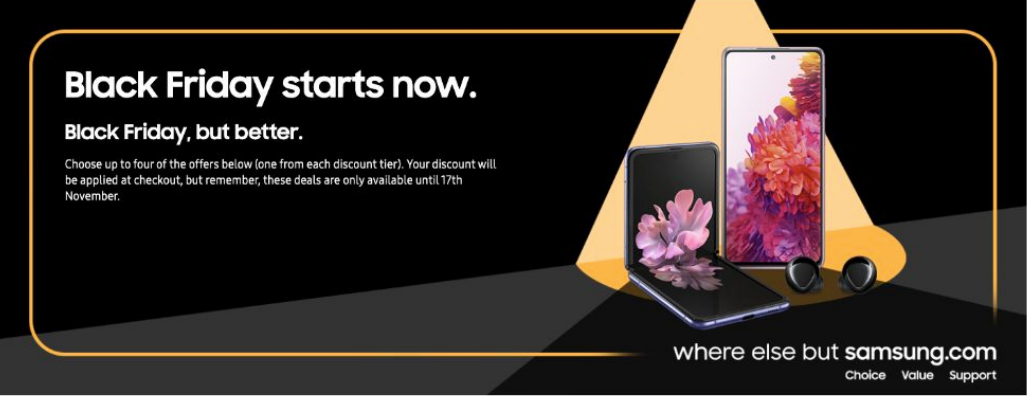
Samsung's Early Bird Black Friday campaign ran tiered discounts across four product categories, with access restricted to early-access subscribers via unique codes. Each customer could select one offer per tier, and Uniqodo's platform automatically applied the correct discount at checkout. The campaign generated 200,000 new customer registrations, a 4.8% conversion rate, and £804,000 in revenue. Read the full Samsung case study.
Win-back campaigns target lapsed customers with an incentive tied to their previous purchase behaviour. Common approaches include:
A personalised offer converts at a higher rate than a generic "we miss you" discount, and it costs less because the incentive can be smaller when the relevance is higher.
Referral programmes turn existing customers into an acquisition channel. Common reward structures include:
Two-sided structures, where both the referrer and the new customer receive a reward, consistently outperform one-sided approaches because both parties have a reason to act. The programme compounds over time: each new customer acquired through referral becomes a potential referrer themselves, which reduces reliance on paid acquisition.
Three problems consistently separate profitable promotional programmes from expensive ones.
Generic codes shared with one partner routinely end up on public voucher sites, where anyone can redeem them. Single-use codes generated individually for each recipient close that gap because each code works once, for its intended recipient.
Uniqodo's Promotion Engine was built to solve this problem: it generates and validates unique codes at scale, so commercial teams can issue partner-specific, single-use codes without relying on engineering to build the logic or manage the rules.
When several partners and channels run offers simultaneously, brands need to know which one actually drove each sale. Unique codes tied to specific partners make attribution exact rather than modelled.
Uniqodo's Code Distribution product takes this further by managing the allocation of unique codes to individual publishers, affiliates, and closed user groups, giving brands a clear line between each code issued and the channel that distributed it.
Enterprise promotions often involve conditional logic: tiered thresholds, product exclusions, stacking rules, customer eligibility. Building each campaign through engineering tickets slows commercial teams down and limits how many campaigns they can run.
Once integrated, Uniqodo lets marketers configure and launch these promotions independently, removing the dependency on developer resource for every new campaign.
The mechanics are the same. A percentage-off code issued to every visitor uses the same underlying technology as a unique code issued to a specific segment with a capped redemption window. The difference is in the rules around it.
Blanket discounting treats every customer the same, which means the brand pays for conversions that would have happened anyway. Over time, it trains the market to expect a discount before buying, which compresses margin on every subsequent campaign and makes it harder to sell at full price.
Effective promotional marketing works in the other direction. Offers are scoped to specific segments, codes are unique and traceable, redemptions are capped, and every campaign is measured against a control group. The question shifts from "how many codes were redeemed" to "how much revenue would we have lost without this promotion." That distinction is what turns promotional marketing from a cost centre into a measurable commercial lever.
The teams that get this right tend to share three characteristics: they separate promotion strategy from execution by using infrastructure that lets marketers move without engineering dependencies, they measure incrementality rather than redemption volume, and they treat code security as a margin protection issue rather than a fraud problem.
Promotional marketing is moving away from blanket discounting and toward controlled, targeted promotion experiences: the right offer, to the right person, through the right channel, with full visibility of what it cost and what it returned. Teams that build that control into their infrastructure run more campaigns, protect more margin, and can prove the incremental value of every offer they issue.
Sales promotion is one tactic within promotional marketing. It typically refers to a short-term incentive, such as a flash discount or a buy-one-get-one offer, designed to trigger an immediate purchase. Promotional marketing is the broader discipline that includes sales promotions alongside loyalty programmes, referral incentives, partner offers, and code-based distribution. Enterprise teams use the wider framework to coordinate these mechanics across channels, rather than running each one in isolation.
The most useful measure is incrementality: the revenue a campaign generated that would not have happened without the promotion. Redemption volume alone can be misleading because it includes customers who would have purchased at full price. Measuring incrementality typically involves comparing a promoted segment against a holdout group that received no offer, then isolating the difference in conversion rate, average order value, or revenue per customer.
Advertising builds awareness and preference over time through paid placements across media channels. Promotional marketing converts that awareness into a specific action by offering an incentive, whether that is a discount, a reward, or exclusive access. The two are complementary: advertising fills the top of the funnel, and promotional mechanics convert intent further down it. Problems arise when constant discounting undermines the brand equity that advertising is designed to build.
Yes. Discounting is the most common mechanic but not the only one. Free gifts with purchase, loyalty points, early access to new products, exclusive bundles, and referral rewards all change customer behaviour without reducing the headline price. Value-add mechanics are particularly useful for brands that want to protect price perception while still giving customers a reason to act.
The main risks are code leakage, poor targeting, and a lack of redemption controls. Generic codes shared in one channel can spread to public coupon sites, where they are redeemed by customers who would have paid full price. Targeting every customer with the same blanket discount has the same effect. The fix is structural: unique single-use codes, segment-level targeting, capped redemptions, stacking rules, and measurement against a control group. When those guardrails are in place, promotions drive incremental revenue rather than subsidising existing demand.

Stop code leakage. Replace shareable generic codes with high-entropy unique strings. Protect your margins by ensuring discounts only apply to the intended audience under specific, validated conditions.

Execute complex campaigns. Move beyond basic discounts with multi-tiered rewards, product bundles, and discounts, all managed without waiting for a developer to clear your roadmap.

Convert with intent. Use real-time data to trigger onsite nudges or referral loops exactly when they matter. Create a unified journey that turns browsing interest into confirmed sales.

Scale partner sales. Automate the delivery of unique codes to thousands of partners instantly. Replace manual spreadsheets and CSV exports with secure, trackable API distribution.




We'll show you exactly how Uniqodo handles your use case - fraud controls, mechanic complexity, and ROI attribution included.